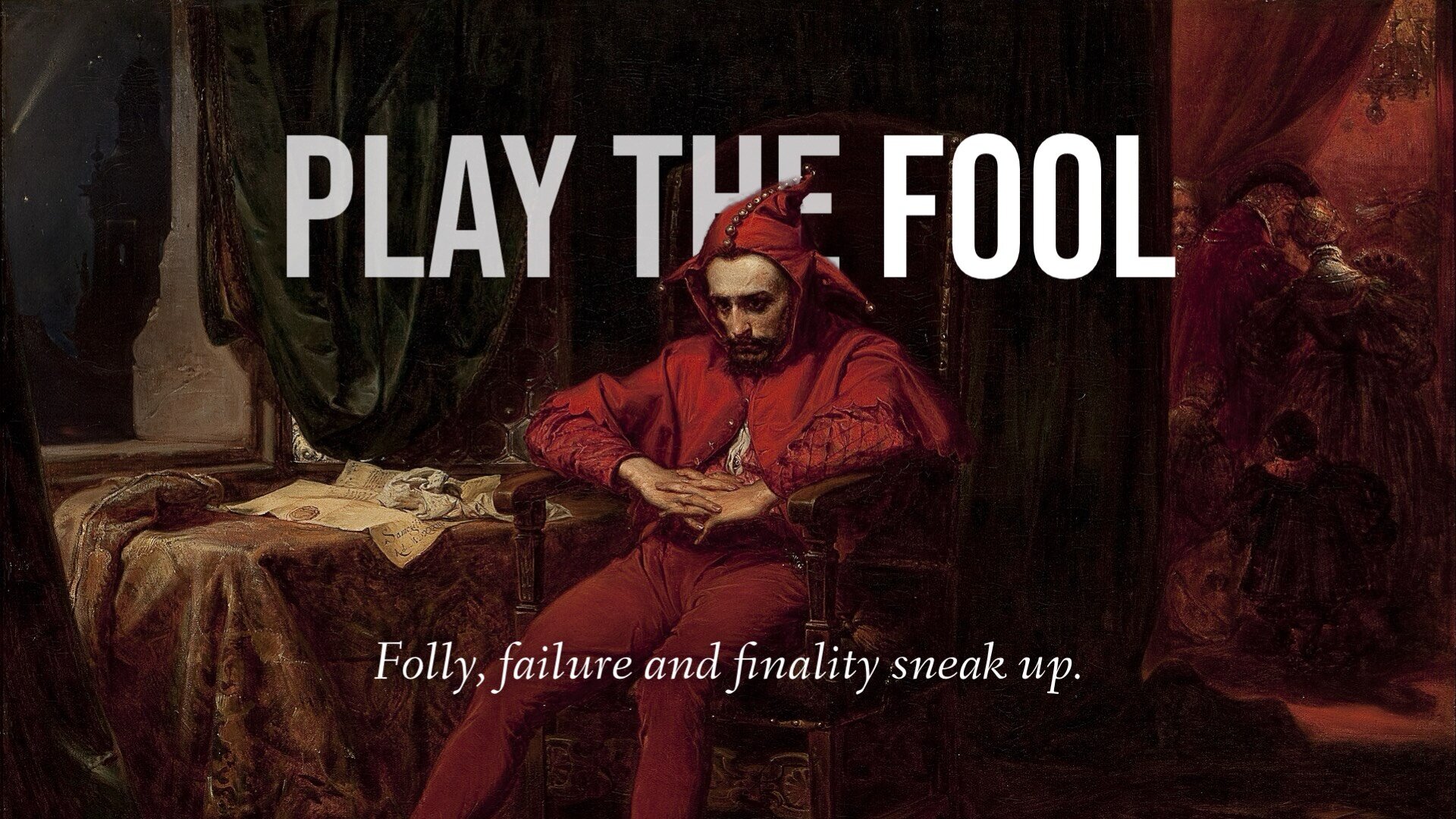
When corruption seems everywhere, it is tempting to imagine that the world just needs a few good people willing to play Batman and set things right. But Psalm 14:3–4 says everyone has turned aside, forcing a harder question: What happens when the same sin we fight in others begins corrupting our own good intentions?
The following study questions are AI generated, but were human verified.
This transcript has been automatically generated and may contain errors.
If you were south of the border like some of our church family is, and you were in Jalisco, you would know something that most of us don’t. Batman is real. Well, maybe not the Batman from the comic books and the movies, but there is someone who has been dubbed the Mexican Batman going around the region finding those who are doing no good and taking care of them. Now, again, not entirely like in the movies, but this masked caped crusader takes some duct tape, he finds the bad guys and he duct tapes them to poles.
Why would you duct tape bad guys to poles? Well, because he isn’t part of the police force. He isn’t actually authorized to arrest people, but he’s tired of the crime. He’s tired of the corruption. And so, he does the next best thing. Make it so the criminals are in a sticky situation until the police come.
Hi, welcome to Steadfast. I am so glad that you are here tonight. If you would, give us a like and a share. Help others join in tonight as we think about our own sticky situation. Because all of us are aware of that sort of corruption that just makes us wish we could do something. How can we fix the situation? Does it take us putting a mask on and going out at night and duct taping people? Well, it might sometimes seem like it.
It’ll be interesting if this man continues. He’s been going for several months now. If he continues to do this, what’s the long term effect? Does it actually reduce crime, or is it just too little? Well, we know in the general history of the world that both officials empowered to go take care of crime and the vigilantes that try to do it on the side, all of them together cannot stop the corruption in the world because it’s everywhere.
Yet we’re deeply and profoundly bothered by it. We’re affected by it. I wonder, why does this go on? How can people be so corrupt all around us? That’s what we’re going to address as we continue in Psalm 14 tonight. In a world where it seems like there are so many fools willing to do evil, how do we fit in and what do we do about it? Let’s pray that God would help us tonight to better understand that, and then to figure out what we’re supposed to do. We’re supposed to put on that mask, that cape. We’re supposed to do something else. Let’s pray.
Father, thank you for this evening. Thank you for this word that we come to, this psalm that speaks your truth and speaks to something that we feel. We may not all be those who go out at night and duct tape criminals, but we all know the sticky situations and we all wish that they would be fixed. Lord, we pray that as the one who can provide that fixing, that redemption, that you indeed would and that you would guide us more fully to understand your plan. We pray in Jesus’ name. Amen.
We’re going to pick up right where we left off last week. We looked at the first two verses last week, and now we’re going to look at verse 3. Verse 3 reminds us that the sort of situation that motivated this masked man to tape up criminals is not something new today. That corruption isn’t new to our time at all. Sometimes we think it is, but we find it right here, right in Psalm 14: “They have all turned aside. Together they have become corrupt. There is none who does good, not even one.”
People turn to corruption. That’s why it’s not new. It’s as old as the fall. For as long as there’s been sin in the world, human beings find ways to become corrupt. There have been reasons why you might want to duct tape people to a pole for all of history. And that might be kind of a novel thing to pretend to be Batman and do that, but the else, there’s so much that’s bad that’s going on. Well, that’s something for every single time in history.
And notably here, and this is the part that we get uncomfortable with, but it challenges the opening question. Everyone turns aside. The Psalm doesn’t say a lot of people turn aside and then there are those few of us who are Batmans who go and tape them up. No, David says everyone turns aside.
It’s interesting the language he used here. Sometimes your Bible translation may say something like everyone turns from the Lord, but it specifically turns aside. This idea of movement, of path here. And then he goes on and uses another metaphor, that of becoming corrupt. And that kind of loses some of its flavor because the phrasing he’s using is turned sour. Like if you have milk that goes bad. You ever had that experience? You forget how long the milk’s been in the refrigerator and you pour it and take a sip and it’s awful? Smells awful, but you probably didn’t notice until you started to sip it and then you think, whoa, I shouldn’t have drank this.
That’s what happens to us as human beings. Just as there’s bacteria that degrades food over time, so too sin is a bacteria that degrades us and our impulses, even our good ones, over time. It’s the problem with trying to become the Batman. Because you think about this man. He apparently is doing good things. As far as we know, people don’t know who he is. But let’s assume the best of motives. Does it stay that way?
Well, if you think back to the Dark Knight trilogy, it challenged that very well. And that’s one of the tensions in the story of Batman in general. Because how does Batman himself avoid becoming corrupt, even in the goal of ending corruption? It’s hard, isn’t it? How long before this man goes from duct taping criminals to duct taping people who just annoy him? Or maybe people who get on the wrong side of his movement to clean up crime? It’s not hard to imagine at all that at some point he might duct tape even good people who simply disagree with his methods.
Why is it not hard to imagine? Because it happens over and over. People seeking to do good, seeking to bring safety, seeking to end corruption, who themselves end up becoming corrupt. It’s the age-old story that plays out over and over and it plays out with us as well. Often do we go and try to help? Maybe because someone else wasn’t being helpful. And yet somehow along the way we end up not being very helpful. Because that bacteria of sin is everywhere.
And the key thing is it degrades even good impulses. The impulses that lead to evil are often good in themselves. How many things are there in our own lives that we can think of? We just stop for a moment here. Think about what you struggle with concerning sin. You ask yourself. I’ll do this right now. You don’t need to put it in the chat. Just ask yourself privately. The things I sin about, how many of them are tied to something genuinely good? And the answer is probably going to be most, if not all of them.
It’s not the entirety of what we do wrong is wrong. It’s that that bacteria of sin deteriorates what we do until it becomes evil. It’s what we talked about last week. The more subtle foolish path. The path that just functionally starts to wander from God. That’s what’s being talked about. We take something that could be good, that maybe even was good, duct taping those criminals and letting the police do the rest, and suddenly we go too far and try to do it ourselves. Or we duct tape the wrong people. Because suddenly it becomes about protecting our ability to duct tape people rather than safety.
It happens to all of us. And the psalm is very clear in this so that we don’t get into that mode that’s so tempting to say well, if only all those corrupt people could be dealt with. Because I’m not corrupt. And I can see the corruption. And the psalm says, well, yeah, it’s really bad that people are corrupt, but don’t go thinking that you’re not part of it. Rather think it’s really bad, and yes, you are part of it.
That’s an essential combination. A few months ago, a woman I’d never heard of came into the headlines here in St. Louis, Monica Butler. Same name, no relation that I know of. But Monica Butler came into the headlines in St. Louis for the wrong reasons. You see, for several years she’d been trying to start the Gospel Music Hall of Fame here in St. Louis. That sounds like a pretty good thing, right? Gospel music? Let’s go ahead and recognize people that have contributed to that art form.
A lot of that is actually very gospel-driven, so isn’t that wonderful? And she wanted to take a church that shut down and turn it into a gospel music museum. It sounds like a wonderful thing. But when she showed up in the headlines, it wasn’t about that. What it was about was that she was part of a ring of a number of people, I think five, six, seven people, who had been participating in loan fraud. Who had taken advantage of those PPP loans that had been put out during the pandemic to allow small businesses to supplement their payrolls so they wouldn’t go out of business and wouldn’t lay people off.
Falsely filing for those with her associates to get tons of money that none of these people were actually eligible for and use them to improve their own lifestyles and their own pursuits they wanted to see improved, such as the Gospel Music Hall of Fame. She funneled some of this money in there. By the time it was all said and done, well over $8 million had been fraudulently taken by these people.
And then they were caught. You think, well, how did she get here? Did she start the Gospel Music Hall of Fame because she wanted to fraud people? I suppose it’s possible. I really don’t know. But I think it’s just as likely, if not more likely, that she started out wanting to do something good, recognizing that there was this wonderful music and that she could take this city and make it a place that people recognized it and celebrate it, and celebrate it well beyond our city limits.
But then you think, well, okay, I’m doing a good thing, so if I do this little bit, slightly less than legal thing to help make it work, it’s not so bad, right? But see, there’s that bacteria of sin. And where did it go from, I could use a little help to get this thing moving, to, I’ll just take some more and then I’ll buy a new car or a nicer house or some nicer clothes, because if I’m doing better, then I’ll be able to support this great nonprofit ministry better. Where did it make that transition?
That’s a big one, right? The sort that gets federal authorities involved and leads to prison time, but we do that every single day, those things where it starts out pretty good and somehow, some way, that bacteria of sin gets in. We’re reminded once again that there is no one who is righteous. Not that there are a lot of unrighteous people. There’s no one who is righteous.
Why would you do that? Why would she do that? Why would she go about defrauding the government in order to fund this? Surely she was going to be caught, right? But we always think that somehow we’re not going to be the ones that are going to be caught. Or that our cause is so righteous, it won’t matter. No one would actually get upset about it.
How often with sin is it that we think somehow it’s justified? But for God, the ends never justify the means. The means have to be righteous themselves. And even when we keep our eyes on a righteous end, we fall into the trouble of not having a righteous path to it, turn aside, just as David said.
Part of that is just the starting point itself. When we think that we can do it righteously and maybe even compromise, but somehow do that righteously, we’re already going the wrong way. But the other problem is the second part of what we saw in Monica’s story. Not only did she defraud the government, but she kept on defrauding them. By the time it was done, her and her associates had filed approximately 40 fraudulent loans. Think about that.
Did they start thinking they were going to file 40? I doubt it. It went over a period of years. But over time, it seems like, well, a little bit more would hurt. A little bit more. Just a little bit more. And a little bit more. Suddenly it’s 40.
The thing is, when we’re dealing with sin, our hunger to keep pursuing what we think is somehow justified, even when we’ve gone way past the duct tape stage, is insatiable. And that’s what we see in Isaiah 3:14: “The Lord will enter into judgment with the elders and princes of his people. It is you who have devoured the vineyard, and the spoil of the poor is in your houses. What do you mean by crushing my people? By grinding the face of the poor, declares the Lord of hosts.”
It’s not that it starts out wrong, but we just keep needing more and more until we’re crushing even the people that we’ve been trying to help. Because somehow, some way, it seems like it’s necessary. And we cry out over and over again, thinking somehow, some way we can justify. Even if someone else can’t. And at some point, we go from a good thing we’re trying to do, that we don’t do well, to just outright bad things. We turn from the good itself.
And that’s what we see in verse 4. “All those who behave wickedly do not understand. Those who devour my people as if they were eating bread, and do not care to call out the Lord.”
It’s interesting. We move from what some people do unrighteously some of the time, to what we all do unrighteously all the time. And then we get to devouring God’s people. And we say, well, I don’t do that. Challenges in our sin. Can we really say that? Even as those who belong to God’s people, where are those times that we simply choose to do what is wrong, even when it actually harms the body of Christ? It’s way more tempting than we like it to be.
That’s where the question is here, that’s asked in the Psalm. Do they not understand? The answer is, it would seem not. You might say, well, don’t people know that there’s a judgment? Don’t they know that there’s going to be a penalty for opposing God’s people? And yet, when we fall into that trap, don’t we know? What do we do?
It’s a pretty dark place this Psalm can take us to, because it reminds us that we really all are on that wandering path. We talked about the road less traveled a few weeks ago. Well, the problem for us is we all take the road well-worn. And that well-worn road is a road that’s wide and goes the opposite direction that we want to go. And as much as we’d like to think that somehow it’s the other people, the Psalm doesn’t allow us to go there.
What we see over and over again is it’s the very people who think that they’re righteous who are often the ones who are on the path of unrighteousness. We see that in the Old Testament and the New Testament. How often do the Pharisees that we keep encountering in Matthew 9 think that they were doing the righteous thing, and as they were doing the righteous thing, they’re often doing the most unrighteous things possible, opposing the Lord Himself. We often don’t even realize it.
But the Psalm doesn’t leave us without hope. Because the very fact that people are consuming God’s people reminds us that there are God’s people that we can possibly belong to. God doesn’t say there is none righteous and there are no people who are mine. He says there are none righteous and there are my people. Isn’t that an interesting contrast?
How does that work? How can that work if none are righteous? How can there possibly be a people of the righteous and one himself if none of us are righteous? Well, it’s the answer we get in Romans 3 when Paul quotes from this very Psalm. Take a look just past that quote in verse 21:
“But now apart from the law, the righteousness of God, which is attested by the law and the prophets, has been disclosed. Namely, the righteousness of God through the faithfulness of Jesus Christ for all who believe. For there is no distinction for all who sin and fall short of the glory of God. But they are justified freely by his grace through the redemption that is in Christ Jesus. God publicly displayed him at his death as the mercy accessible through faith. This was to demonstrate his righteousness because God and his forbearance had passed over the sins previously committed.”
See, Paul reminds us that we’re not left in that place of, they’re all corrupt. And, by the way, we’re part of that all. No, we need to hang on to that second part. The fact that the corrupt ones try to consume God’s people remind us that there is actually hope. That even though all are corrupt, not all are rejected.
How can that be? Because well, we’re not righteous. Well, we can duct tape as many corrupt people as possible, and we won’t duct tape them all. We will become corrupt ourselves, and we can’t ultimately get to that righteousness on our own. There is one who already is righteous, and he’s the one that can fix it. It’s not all of us who see the problem until we are the problem.
Just this week we had the headline of this huge national achievement that we have as a country here in the United States. Not the 250th anniversary, of course that was a month and a half ago, but the reaching of $40 trillion in national debt. That’s quite a milestone. Not maybe a milestone we really want to celebrate, but it definitely made the headlines because $40 trillion, think about that for a moment. How many of us have seen $40 trillion of anything? Anything at all? And now we as a country owe $40 trillion in debt for the things that we keep buying as a country.
And the interesting thing about that is everyone agrees it’s a problem. People don’t say, oh, you know, it’s good that we’re in debt. But it works out a lot like this. Whichever party holds power in our country spends a lot of money. Whichever party is out of power in our country talks about how bad it is that we’re spending so much money on these horrible things that we’re choosing to spend it on. And then the voters get tired and they vote for somebody else from the other party and the very people who have been complaining about spending too much money. What do you know? Now they’re the ones spending the money. And those who are spending the money are now those who are complaining about how we’re spending the money. But the one thing that doesn’t change, and you can see this if you look at a chart, we just keep spending the money.
And we can see it clearly when we’re not the ones advocating for what’s being spent. But when it’s our folks doing the spending somehow we don’t notice as much until later. And if you think about our national debt, it speaks exactly to the moral debt that we owe. Because we’re very good at seeing how other people are spending their lives sinning, digging themselves into debt and pointing out that corruption and wishing it would go away. But this psalm says, but don’t you realize, look at the chart, when you’ve had the opportunity, what have you done? You’ve contributed to the debt of sin as well.
There’s none righteous. Does that mean we should just give up and say, oh well, it’s okay that we’re not righteous, it’s okay, we’ll just go with it? No, of course not. But it points out that all the self-righteous talk we can use, it’s flat because we do the same thing when given the opportunity. Oftentimes even as we seek to fix things, we do the very things we’ve been railing against.
Not with just spending national money. Most of us will never have an opportunity to really speak into that issue. But in our very lives, when we complain about how other people are unkind or too busy to help somebody or this or that, we go and do the same thing when we have the opportunity to do better because none are righteous, including you and me.
The question is, do we recognize clearly enough that it’s bad that we say, I’m not righteous, but I need the one who is. That is the heart of this. Sin’s going to always entice us to spend more and more and more. And somehow it seems justified when we do it, even though it seems unjustified when others do it. But it’s just as unjustified all the time. The chart just keeps growing. The debt keeps growing. And bankruptcy looms all the more present for each of us.
We think it’s that other person and his or her sin. The other group and their sins. And Paul addresses that very thing in chapter 3 of Romans, where you have the tension between the Jews and the Gentiles and their cultural differences and their background differences and is it better to be part of the people who had been descended from Abraham and were chosen from long ago but didn’t necessarily understand who Jesus was early on or is it better to be part of the Gentiles who always rebelled against God but now were given this new chance at mercy?
And Paul’s answer is very clear. It’s not better to be either. It’s better to be Jesus’. And if that’s what really matters, it doesn’t matter whether you’re Jew or Gentile. It doesn’t matter whatever we think is that status-building aspect that we can put in parentheses after us today. It’s not what’s going to get us out of debt. Keep contributing to it.
There’s only one factor that matters. And it’s the very one alluded to here as God says, everyone is unrighteous. But I do have my people. Because Jesus came into the world to draw people into that people. People like you and me.
And for those of us who have turned to him, it’s a reminder that we’re still those who are unrighteous. And the only thing that matters is that we’re his.
So what should we do? We should quit talking about ourselves and how we’d fix things and start talking about more of the matters of the cross. That Jesus is the one who does fix things. And if you haven’t yet trusted in Jesus it doesn’t matter if you’re the person applying the duct tape to the criminals or you’re the criminal who’s now in a sticky situation.
Jesus came for both Batman and the robber. He came for you. He came for me.
No matter how much we think that we can make things righteous, we can’t. But he did come for us as the one who is righteous. That we can hear that word, my people, and know that we can be a part of it. Would you pray with me, please?
Father, we do pray that you would help us to understand our state. That in ourselves, we are not righteous. We never have been. And in our own doing, we will never be. Because you love us, you sent your Son, our Savior, into this world that we could be made righteous through him. Not of our own righteousness, but of the righteousness that he brings into the world. The only righteousness that we can ever hold on to. And would you make sure in our hearts that he and he alone serves as the factor that makes the difference. That we don’t think anything else does. Because only in him can we ever escape the debt that we’re in.
Lord, would you help us, because we desperately need to make that escape. We need to make it today. We pray in Jesus’ precious name. Amen.
Start the Conversation