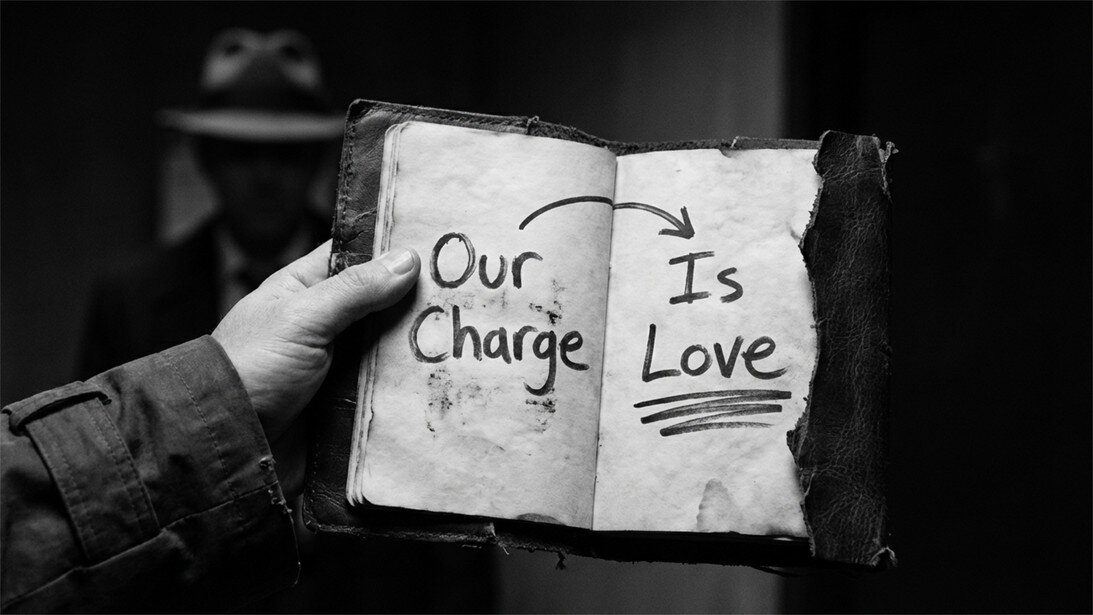
We too often forget that the source is joyful and accept the far more mundane or depressing secondhand source.
The following study questions are AI generated and may contain errors.
This transcript has been automatically generated and may contain errors.
Six years ago on this very day of the week, this very date of the month, and this very time, I came on live and joined you so we could jump into scripture together. It felt sort of like it did tonight, but not quite as well. For one, it was only supposed to be a three-week series, and two, we were watching our whole world shut down. We didn’t know what to think. But now we’ve been together for six years doing this, and if you’re here tonight for the first time or you’ve been here the whole time, all through those six years, I’m so glad you’re here tonight. Welcome to Steadfast.
I am excited to dig into the next part of First Timothy with you, thinking about our God who is indeed steadfast. The fact that we’re here six years later, that’s God’s steadfast love that He shows us. We look for steadfast things in life, don’t we? Things we can depend on, people we can depend on. Sometimes it’s the people we know, and sometimes it’s the people we only know by reputation, maybe a public figure or celebrity that in some ways seems reliable.
I think, for many people I know—and I would include myself in that category—William Shatner sort of feels like, as far as earthly steadfastness, kind of one of those figures. He’s been around forever now. You, of course, as a Trekkie, know he’s foundational to Star Trek. But then all the other things he’s done since then: the delightful spoken-word albums, his Christmas album—it’s just fantastic. And then just right back to where it started: Captain Kirk. But in recent years, he has also grown a following because he delights on social media. Here he is, 94 years old, and he’s on social media, not getting into all the angry stuff people usually get into but having fun and trying to make people smile. Interacting sometimes with Elon Musk, he loves being on X, and so the two of them will go back and forth— all those sorts of things.
Well, about a week ago, I started seeing posts that William Shatner was going in for emergency shoulder surgery. He’d allegedly had a horseback riding accident and off he went. He was going into surgery because without that surgery, he might not survive. And of course, at 94, you wonder, is he going to survive even with that surgery? I remember reading that and thinking about that, and thinking, this is awful, right? Here’s this figure who just has added a lot of joy to an awful lot of people’s lives for the better part of a century now. It sounds like living this incredibly lively time with gusto as he’s in his 90s had led to an accident, and he kind of thought, well, there’s the end of that.
Problem was, the rumors weren’t true. It’s a good problem to have. Shatner went online and, sort of like Twain did many years before, noted that the rumors of his demise had been greatly exaggerated. He was going into the hospital for a minor procedure, planned to be out the same day. In fact, he was going to do a speaking engagement the next day. And sure enough, he’s been online doing his normal humor and just enjoyment of life ever since.
It struck me if you go to that secondary source, how it seemed to be giving useful information, but it was actually leading to sadness and disappointment and a lack of joy—the very thing that Shatner’s account provides. This man, who just enjoys the legend that he is, the actor who played Captain Kirk and has done so much else, and the joy that he has by providing the humor he does, and so on. If you went to the secondary source, you lost that. When you went back to the primary source, there it was.
You might say, well, that’s interesting. But why are we talking about that as we go into more about God’s faithfulness? Well, so often as God shows His faithfulness to us, we do the same thing. We turn to that secondary source, people saying, well, this is how we should live life, this is what we should do, even this is who God is, and we don’t come back and encounter Him and the profoundly different thing for the Apostle Paul as he goes and encounters Him.
If we can get some joy from hearing from an actor who just has a gusto for life, how much more joy can we get when we actually come to the primary source, the one who actually gives life? That source is joyful tonight. That’s what we’re going to be thinking about.
Would you praise me, please? Father, thank you for the joy that you do indeed provide. Thank you for the wonder of who you are, and as we dig into this next part of First Timothy tonight, would you apply the truth of your love, of your graciousness, of your joy that you give us to our hearts? We pray in Jesus’ precious name. Amen.
Let’s go ahead and dig right in. Paul says now, to the eternal King, immortal, invisible, the only God. Talking about how God is amazing here. Now, if you’re joining us for the first time tonight, let me just quickly mention where we’ve been over the last few weeks. Paul’s been giving instruction to Timothy about how Timothy should take the mantle of leadership as Paul starts to approach the end of his life and his calling.
In that context, Paul’s been describing what he’s gone through, how God called him even though he was unworthy, and as he’s describing all that, he just breaks into praise about who God is. If you look at this passage, it’s not as if Paul has been building up to these grand attributes of who God is, no. He’s just talking about what has happened in his life. Verse 16: “But I received mercy for this reason, that in me, the foremost, Jesus Christ might display his perfect patience as an example to those who were to believe in him for eternal life.”
He’s talking about how God has used him, and then he just can’t help but exclaim to the King of ages, immortal, invisible, the only God. So Paul here is saying, all these amazing things that God has done in my life, that He has taken me, the worst of sinners, and used me to expand His kingdom. Well, what do you know? He’s amazing. I just need to talk about that for a moment. I just need to exclaim; I can’t hold it in.
Think about how often we talk about even the things of God and we lack that joy. The theologian Karl Barth, almost a century ago, remarked that the theologian had no business being sulky or morose; the theologian should have joy. Why? Because we’re talking about the God who loves us and saves us. How in the world can we possibly just go about it as if it’s dull?
Sometimes we do. Paul here doesn’t. He’s describing these things. What does he say? Wow, God’s amazing—that’s really what he’s saying here. And the language he uses is the language that would have been used in the synagogue. In a sense, Paul is in that mountaintop worship moment. If you’ve ever had a moment where you’re in church and the music was just right, or the preaching was just right, and it just really hits you—and if you’re in sort of church, it says amen, you said amen, or you clapped, or whatever it might be, or if you’re in a more reserved setting, you just felt it inside, and you really felt this moment of closeness to God. Whatever was appropriate in that church setting, you did it. That’s sort of what Paul’s doing here.
He’s spent his life in the synagogue, so he goes from intellectual description here, “Timothy, here’s how this works too,” to “I just need to worship God right now because I’ve been talking about how amazing He is, and you know what, I just need to exclaim He’s amazing.” He goes from the information to the actual worship, and that’s what we need to do, too. We don’t want to fall into that trap where we’re just exchanging information, just describing things. We want to go back to the joy of the author of life.
We need to quit going to those secondary sources that are just describing speculative, possible, horrible things. That, for example, that piece of news I saw on Shatner— it may be that the person who reported got word that Shatner’s name showed up—you know, it would have been a violation, of course, of privacy laws—but Shatner’s name shows up in a hospital log, and some of those go, “Oh, Shatner must have done this.” Well, he loves horseback riding. I know, 94-year-old horseback riding, he’s amazing, right? But then you put the pieces together, and suddenly you have this horrible rumor.
How often do we put the pieces together, and we don’t just go in and look at who God is and what He does? Instead of getting the joyful picture, we get the joy-lacking picture. But the very fact that I’m here with you tonight, that we’re together as a church, that I can talk about Little Hills Church—that’s something we should just describe kind of in a dull sense? It’s a picture of God’s faithfulness, just like what Paul is encountering here and feeling here. It’s amazing.
Was that a whirlwind tour or what? I wanted to share just a little bit of where we’ve been over these last six years. There’s a hundred and twenty-seven photos or videos there, and in three minutes—that’s really, really high speed. And you think about it, I didn’t even include everything. There was so much more that’s happened, but you can see God’s faithfulness throughout it. If you looked at the beginning, of course, we were all on screen, and there was a lot of preparation and false starts on our human end of when we could launch in person, and all those sorts of things.
But God took that foundation of what happened with Steadfast, and as we gathered together and we started to see the family form as a church, just in the weekly chat with this video and then the Bible studies that moved to online, and then us praying before we could even launch as a church, and the building repairs before we could launch as a church, and all those things—and now how it all comes together and we’re still a church family online and in person together—and you see how those fused together in a way that I certainly couldn’t plan.
You think about that. Just Paul says here, to the King of ages, immortal, invisible, the only God. Who else can make this happen but our God? He is the one who can do it. Paul’s encouraging us here, saying, look at how God has worked in your life. And if you’re a part of Little Hills, this is certainly a part of how God has worked in your life, right? We see how God has brought us together and made this happen, and the unlikeliness of it. By every human standard, it shouldn’t have worked, but here we are!
Think about that. How amazing and faithful is our God? He’s so amazing and so faithful. And if you aren’t a part of this story yet, well, for one, I would love to have you be a part of our little part of the story. It’d be great to share it with you. But here’s the more important thing that isn’t about Little Hills. It’s about our God. He is the God who is immortal and invisible, the only God, the one who has all the power. And so He’s working everywhere, He’s working in your life.
What we’re being encouraged here to do is to reflect, as Paul has been reflecting, and then to move from reflection—don’t just reflect on how God does amazing things abstractly, but look how He’s doing it in your life. Maybe the fact that you’re here tonight is part of that. It’s part of that saying, tonight’s the night you need to come to know me, or you need to get to know me again because you’ve kind of wandered off, or you just need to stop and pause because you’ve been so busy even though you know me, you don’t ever actually get to have the joy of just the care and the love that I have for you.
Paul’s encouraging us to encounter God as He’s working and see how He’s working in the disappointments. You think about that pandemic in our church launch. We were supposed to launch three weeks after the pandemic shut everything down. That was a huge disappointment. I mean, in the scale of everything going on, there were a lot of bigger disappointments, right? People losing loved ones and losing jobs and world and chaos, but a little picture of that was this thing that we’ve been working on and praying for and hoping for, and it seemed like it wasn’t going to work.
I don’t think we’d be the church we are today if it hadn’t worked the way it did. If Steadfast hadn’t started as the first service of the church, and our family hadn’t gathered online—from not just here in St. Charles, but when we talk about here for Little Hills, it means St. Charles, and it means New Jersey, and it means Guanajuato, and it means India, and it means Kenya, and it means Paraguay, and it means the Philippines, and it means all these different places. It means all of them, because we actually come together from all those places and we worship together, we celebrate God’s goodness together, we partner in ministry together. It came from a disappointment.
What disappointments in your life is God saying, look at that disappointment, because I’m not going to leave it as a disappointment. I’m going to use it to my glory, and as you see my glory in it and my faithfulness in it, it’s not going to be “Well good for you, God.” It’s going to be joy because you’re going to experience it too, just like we do with Little Hills here with what’s happened—not just at church, but not just at church, but in every moment of life.
If we believe what Paul’s confessing here—God is amazing—then we can hold on to that joy even when it’s uncertain. I sure didn’t think I’d meet His work in Him shutting down the world, but this incredible six-year roller coaster of joy because of how He worked in that circumstance as things went terribly wrong.
Romans 11:33: “Oh, the depth of the riches and wisdom and knowledge of God, how unsearchable are His judgments and how fathomless His ways.” We don’t always understand how God is working, but we see in Romans and First Timothy interlocking facets here. John Calvin points at that Romans passage—you know, that’s earlier in Paul’s life. He already knows how amazing God is, because God could smack him over the head and then on a journey say, “Hey, why don’t you do what I’ve actually called you to do? I’m going to make everything fit together so you go and do my work rather than working against me.” And Paul experienced that.
And here, towards the end of Paul’s life, I think you can reflect on it in some ways even more. He’s seen it play out over and over again, but he’s picking up that same theme over and over and over again. And here’s the key thing: as Paul sees that and experiences that as he encounters the source, well, it leads to what? Leads to praise.
Take a look again at First Timothy 1:17. “Now we already looked at: to the eternal King, immortal and invisible, the only God. But notice what he says next: be honor and glory forever and ever. Amen.”
God deserves all glory, all praise. That’s where we go when we recognize who He is and how He works. We go from that to praise. So we think about the six years of Little Hills, what should we do? We should praise God. I think we could feel that last night as we were gathered in just the excitement and the joy. I think we can feel that tonight as we reflect on how God’s working.
And one of the key things: if we aren’t reflecting on how God is amazing and how He works, we’re going to find our sense of wanting to praise Him diminished because we’re losing a sense of how He works. And that’s not only depriving God of praise, it’s depriving us of enjoying actually being in relationship to Him.
But if we actually recognize who’s doing it, we worship Him. Why? Because, well, He’s the only one doing it. Again, if you look here at this passage, Paul says what he says: to the King of ages, immortal, invisible, the only God.
Why do we praise God? When things are amazing, they’re happening, and when He works even in the bad circumstances—because He’s the only God. Now, that only there could also apply to the honor being given to God. I lean with Calvin that this is being applied to God Himself, but Calvin makes a great point. Even if your translation says that honor should only go to God or glory should only go to God, why is that? Because He’s the only God, and if we say He’s the only God, well, then where should honor and glory go? Well, to the only God.
So the point remains the same, and the key thing is there’s one source of ultimate joy, of ultimate life. And Paul looks at his story; there are things you wouldn’t do over again if he had the chance. He certainly wouldn’t persecute the church if he could rewind time. I don’t know if Paul ever played out that hypothetical, but I know this: he certainly didn’t want to be a persecutor of the church. That wasn’t his desire as he looks back on his life that he persecuted the church, but he did. And as someone who did, you could look at how God could take him as a murderer, as an enemy of God, and turn him into an ambassador for God.
The only thing you could say about Paul’s life is, praise God. All Paul could do when you reflect on that was praise God. He couldn’t bring anything to the table. He knew that better than anyone looking at my right. I mean, people administered to by Paul—it seemed like here’s this wise old apostle who knows so much about the Bible, and he’s encountered Jesus, and he’s planted churches, and isn’t he great? And Paul could say, I can’t bring anything to the table. The only thing I deserved was for God to smite me and destroy me on that road. And that would have been actually gracious, that He ever allowed me to be born and go that far.
But He didn’t do that. He restored me and made me His. It’s the beauty of who God is. Joyce read our call to worship yesterday during our service, and it was from Revelation chapter 5. I just wanted to take us back there for a moment. Revelation 5:6: “Then I saw a lamb who appeared to have been slain standing in the center of the throne and circled by the four living creatures and the elders. The lamb has seven horns and seven eyes, which represent the seven spirits of God sent out into all the earth. And He came and took the scroll from the right hand of the one seated on the throne.”
When He had taken the scroll, the four living creatures and the 24 elders fell down before the lamb. Everyone had a harp, and they were holding gold bowls full of incense, which are the prayers of the saints. And they sang a new song: “Worthy are you to take the scroll and open its seals, because you were slain, and by your blood, you purchased for God those from every tribe and tongue and people and nation. You have made them to be a kingdom and priests to serve our God, and they will reign upon the earth.”
Notice that what God does is tied to the glory that He has, the praise that’s poured out to Him. It’s the praise for what he’s given for us, that the Lamb, as He’s receiving this incomprehensible glory here, He’s being praised, and we have the prayers of the saints that turned into incense before Him, and this new song is being sung before Him. He’s not just a lamb; He’s the Lamb who was slain. What they praise Him over is how His shed blood has bought you and me, has bought them. It’s about all who trust in Him. Because of that, He’s made a kingdom.
And we think about what’s happened here and what happened because Steadfast started—that’s God expanding His kingdom, right? We’re just a little bitty part of it. That’s why we love working with other churches and working with other churches both locally and around the world, because we’re just a little bitty part of it. We’re a part of it. He’s done something there, and He continues to, from every tribe and tongue.
We get dull, almost blinded, to the amazingness of God because we’re just going about life. Because we just need Him to bring it back and focus, bring our experience back and focus, so we see our loving Heavenly Father. You reminded me of that when I saw this video a short time ago.
See this baby here? He’s never been able to really see. He’s struggling. Oh, that’s right, he doesn’t know what this thing is they’re trying to put on him. Why are you trying to put this thing on me? What are you doing trying to put this thing on me? Yeah, good. So he still has a little bit of space but starts to pull snug right there. You still have like a quarter inch that you can tighten.
Look at that joy. You think about the joy that that baby has. It’s like the joy that we have when we actually focus on what God has said and we see our Heavenly Father. Because you know, when we’re just going through life and we get to that dull, sort of muted place, it’s like we don’t have those glasses on. It’s like we’ve been born, maybe we’ve gone through all of our lives never actually really seeing the face of our loving Heavenly Father.
We come to His word, and we start to reflect on how His word unlocks what’s happened in our lives. He’s putting on those glasses on us, giving us a chance to have that smile of joy because we see that we are loved by the very one who deserves all the glory and honor. We struggle so often when God is trying to show us that. I struggled against delaying launching Little Hills. I struggled whether we should have a livestream before we launch because it felt like, well, that’s not really that our first service, right? Had no idea what God was doing.
But even as I struggle, what does He do? He keeps putting the glasses on. Even as you struggle, He keeps putting those glasses on because He wants us to actually see Him, to see His loving care.
I believe what Paul is challenging us to: that we need to keep in mind every day, certainly as we go into this next year of our story, but just in life, what do we need to do? We need to actually reflect on who He is and what He’s done. Let’s not lose sight of what He’s done as we try to figure out what the next challenge is and how we deal with it. I’m really good at focusing on, “Oh no, how am I going to handle this next thing,” we forget what He’s already done.
Here, let me put those glasses on you, Tim. Let me help you see a little bit. So when we see that God is amazing, He does deserve all praise—just that little baby saw his parents and realized that there were these people who delighted in him. Smiles to see them. We see our loving Heavenly Father, we realize that the one who deserves all glory and all praise, who’s mighty beyond description, He loves delighting in us. What an amazing thing that is.
When you praise me, please, Father, we do pray that You would guide us and help us to see more of the joy that You take in us, even though we don’t deserve it. You simply love us. When You put those glasses on us and help us to see more clearly, would You help us to hold on to what You’ve done that is faithful as we look at the next challenge, the next step? Because there’s always something more that we need to do. You’ve placed us here to do things.
You don’t want us to stop doing the things that You’ve called us to do, but You want us to do them with the joy, the confidence, the security that comes from knowing how You’ve worked throughout our lives and in the lives of those who follow You throughout all time. Would You help us to hold on to that this night and every night? We pray in Jesus’ precious name. Amen.
I hope this has been encouragement to you today. I know I always ask, but would you please click that share button? Whatever channel you’re watching this on, whether you’re on YouTube or X or Facebook, hitting that share button and sharing this video helps more people see it, both directly as you share it and also by telling those services, “Hey, this is a share-worthy video.” Maybe you show it to more people and the algorithm starts to, and certainly, I’d love for more people to hear how God has been faithful in our story.
Because this is the thing: His faithfulness to us as Little Hills Church is really just pointing to how He is faithful over and over and over and over again in a million different ways. And if you’re here for the first time tonight, that’s true for you.
If you have any comments or questions, I would love to pray with you. Our prayer team would love to pray with you. You can always text our number, 833-356-4032, or use the comments below. It’s great to hear from you either way. We love getting to pray together. Hope you have a wonderful and blessed week.
And I’ll see you again because we’re going to keep going, studying our steadfast God. I’ll see you again next week. Have a blessed week.
Start the Conversation