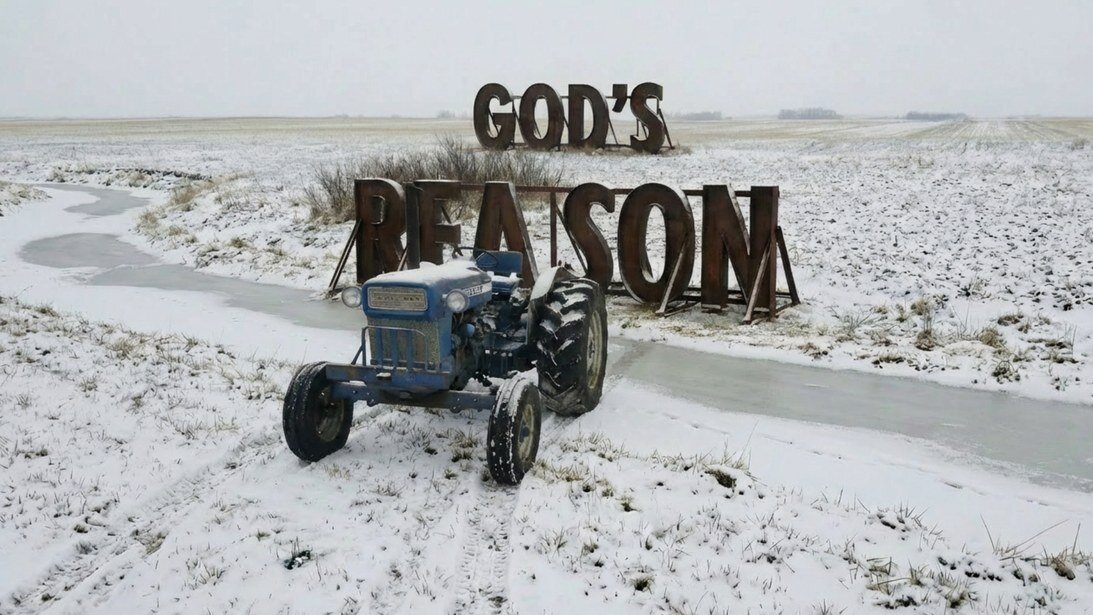
Whatever looks triumphant—the people and things we hold out as the absolute measure of concrete, dependable success—still meets death that tramples it. Isaiah warns that rebels and sinners will together be shattered, and those who forsake the Lord will perish. What then are we going to hold onto?
The following study questions are AI generated and may contain errors.
The sermon contrasts worldly success—represented by Chuck Norris’s legendary invincibility and the sacred oaks of Isaiah—with eternal values found in Jesus. Where do you personally struggle most with holding onto temporary measures of success? What specific areas of your life are most tempting in this way?
The preacher uses the diet drug fen-phen to illustrate how worldly solutions can appear successful on the surface while causing hidden, lasting damage. In what ways might modern Christians be tempted to “plant sacred oaks”—combining worldly success strategies with their faith? Can you identify similar “pills” in today’s culture that promise quick results but quietly damage our spiritual health?
Isaiah 1:28-29 declares that rebels and sinners will be shattered, and those who forsake the Lord consumed. The sermon suggests the real issue isn’t whether people achieve earthly power, but whether they respect and follow God. How should this reshape the way we evaluate success in our own lives and in our broader culture, especially when those who forsake God appear to thrive?
The preacher draws a sharp distinction between revelation—what God has actually said—and preference—what we happen to like. How does this apply to our worship practices and faith decisions? Are there areas where you’ve quietly chosen preference over revelation without fully realizing it?
Chuck Norris eventually recognized he had begun believing his own “Superman” image and needed to reorient his life toward Jesus. What does genuine reorientation toward Christ look like practically for you, and what might be preventing it? How does the hope offered to “non-Norrises” in 1 Corinthians 15:55 speak into that process?
This transcript has been automatically generated and may contain errors.
I remember Saturday night in the 1990s. In particular, I remember, I wasn’t a big TV guy as a kid, but I remember that my great aunt, my grandma, and my uncle all wanted to make sure to be ready to watch television on Saturday night because Walker, Texas Ranger was on. And you needed to see the eyes of the ranger taking care of all the crime and lowlifes in Texas. For what, 8 seasons, that show was a major success. But then it seemed like Chuck Norris almost took on an even more legendary status thereafter. But it was 3 or 4 or 5 years after it went off the air that suddenly the Chuck Norris jokes seemed to just take over the world, right?
Are those jokes? Oh no, they were actually observations. Observations, sorry, yes. Observation, I guess. You know, Chuck Norris didn’t do push-ups. The Earth pushed down, right? Um, and so it went over and over and over again, right? The boogeyman checks under his bed for Chuck Norris at night. I remember at first I thought, what in the world is this? And then it just, you know, it was just, it became part of our culture, and I understand that Norris himself was amused by the whole phenomenon. And so there was just this thing there, right?
Because Chuck Norris, whatever it was, he took some hard problem, he took some immovable force, he put it next to Chuck Norris, and of course, it bent, it broke, it was ended by Chuck Norris.
Well, last Monday, I mentioned there had been rumors going around about some horrible injury for William Shatner, and how that didn’t turn out to be true. In fact, I thought yesterday was celebrating his 95th birthday on the beach, smoking a cigar. So he’s still moving along as he ever does, an inspiration and how he just keeps going.
Sadly, though, this week, Chuck Norris passed, right? He didn’t go on. And so, we thought, even the man, whom the boogeyman checks for under the bed couldn’t defeat death. It made me think how the things that we looked, the things that we see, the people we see think, seem triumphant.
The ones who can dominate for decades, memes as being triumphant, ultimately every single one of us, everything that we do meets something strong. And it tramples, nevertheless.
Prophet Isaiah goes on, we’re coming to the end of our chapter. We have just this week and next week left in our chapter, but as we’re nearing the end, the message the prophet’s going to make very, very clear is: Every earthly triumph,
and the Chuck Norris of Jerusalem, well, very better than the Chuck Norris of Texas.
Whatever it is that appears to be triumphant, death will come. Success will erode.
Question, what are we gonna do then? What do we do with that? When we get to the point where we say, yeah, I know I hold this person or this thing out as the absolute measure of concrete, dependable success, right?
Maybe we hold that with that character, the Texas Ranger who always gets the bad guy. But that way you move beyond that, move it to the actor behind that character, and then that doesn’t work out either ultimately.
What is it we’re going to hold on? Let’s pray tonight that we have our hearts focused on holding on the right.
Father, thank you for this evening. Thank you for your word. Would you help us to hold on to it? Hold on to you, the triumphant. Although we see the successes of earth, although what you’re even praiseworthy, you’re at least fine. But even the best ones we know ultimately will reach their end. You help us hold on to something that doesn’t, to someone who doesn’t. We pray in Jesus’ precious name. Amen.
The first thing, and this is the part I think it’s hard for our minds to get around, the first thing we need to do is just understand that whatever and whomever looks triumphant won’t be.
Turn back to Isaiah verse 28. But rebels and sinners will together be shattered, and those who forsake the Lord will perish.
Now we’ve encountered these rebels before. We saw them a few verses before. Who are the rebels? The rebels were the rulers, the ones who by every societal definition in that moment were triumphant. They were ones with all the power. And when things went badly, they were the ones who were still doing okay.
They get mixed into the scissors. Although are on the wrong side of the world, it’ll be shared. So the loss of power. They might be cruising along. Everything’s going just fine, but just went, like, that awful crunch when a car ran into the back of you to satellite. And one moment, everything’s fine, the next one was very much not fine.
So two, they’ll be cruising along, everything’s singing by. And the gosh, yeah. He says, you can think that the rebels can rebel against me, they can do whatever they want. They can seem to be in control and they will for a time actually be in control. But only if we mean in a passing sense.
If we really think they’re very controlled, well, they really have patrol for their destiny, then they can have earth pushed down, rather than push them. It’s not gonna work out. Not all the time.
What leads the kind of nation? What is this? The thing so deeply offends to God. I think if you look here, we like the songs, we have a parallel structure, 2 things, and you might say, oh, parallel, which I felt really boring, but it’s actually God giving us a hint how you want to understand what’s going on.
Notice the first part of verse 28, but rebels shall be broken together. And those forsake the Lord shall be consumed.
Well, rebels and sinners are the group of people, but what we’re being pointed to, those who forsake the Lord, those are the ones who are going to be consumed, really shattered. We’re going to experience ultimately God’s destruction.
What’s the problem? Not whether they can achieve early success and power or they can build oppressive buildings. Whether they can need to be in control of their own destiny, whether they’re admired by the people around, the question is, do they respect it or don’t?
Analyzing our own lives, do we forsake people or adult? We better success by… Are we able to pay the bills? Are we able to go on vacation? Are we able to live in the house that we want to? Are we able to take the amount of time off that we want to? Are we able to retire and go and do the things that we had, our bucket lists do? Are we able to do those?
That’s the measure we ought to use. And by those years, the rebels and the sinners, well, they could actually be the ones succeeded. They were able to pay their bills. They were able to check out all the comforts of society, live in the nice houses, the paths, maybe in it. They had a lot of award.
Together, they’re going to be missing. All of them turn away, are they? But it looks so good at the moment. That’s why God keeps bringing us back to the pounding is in it. Because… No matter, even with the, yeah, I know that it’s not like the reward of what really matters. We still go back and say, yeah, but, but, a little slow, successful.
We’ve all heard the stories of the wonder miracle weight loss drug. Whether you can’t escape the advertisements. The one that everywhere you go, people are promoting it. No, I’m not talking about the GLB ones right now. I’m talking about benefit. Remember Benett? Yeah. This is 90s night here. Yeah. Yeah. Yeah. And I remember everywhere you went in the mid-90s, there were like the intersection. Get your benefit.
It was going to be the miracle. Time ran a cover. Is this the numerical drug because people could take this drug, pop a couple pills? It was way… cure all the illnesses related to be… overweight, like, gray wonderful.
I was reading about history. The reason of having funny names, actually two different drugs combined together. And the one of it around weight loss was since the 1970s. But they had a number of unplugged effects, including, it made people just feel awful. They didn’t feel like themselves, they got depressed. They might have been losing weight, but they didn’t feel good about it.
And then the students went off, and they gave it back. You could be miserable by your weight loss, you could just go back to whatever you were doing before.
But then someone realized, well… The fact that the wander out of it, made people feel a little worse. What if you gave another drug that had the opposite of the fact and bite into the other, so people would feel okay if they were taking this and making them feel bad?
Well, if you think that’s… But even though reports coming out, this is actually incredibly harmful.
We started to see it spread across the United States. Some states refuse to just allow it to be sold because it was all label, they said this is a little dangerous, but the people just drove across state lines because they wanted the marital drug, right? I take a pill on this way, it would be wonderful.
Why was it having those reports started digging across? What was it been doing when it made people feel it was early for they could buy the second rug? Well, just destroying the balance and card, not at all.
For people, 20s, 30s, we’re going in with irreversible heart damage. Just a month after starting to take it.
And so by September of 1997, this marital drug that had taken the world by storm that you would see everywhere just as much as we see today. The current one year diet drugs, which removed from the market. Because instead of actually making people all the year was destroyed.
I thought that if you just look at the person’s weight at all, losing all this weight, something healthier. They look better because of law. Wait, this is great. And then in the meantime, what I was doing was destroying your heart.
And that’s what our only successful does. It’s a pill that seems to get us really fast. Without all pain, without all the struggle of doing it God’s way. It seems to just get us right there.
And a lot of times, even as we go to the world, right? People look at us and say, you know, wow, you look so good, you look so healthy.
And sometimes, in worldly ways, they make us feel kind of awful, but then we find otherworldly ways we can combine with them to cover up. The ways that we feel, oh, we go along and it seems to work, and the meantime what it’s doing is destroying our harvest.
But the moment that I try, it looks so… Looks way more promising than guys renouncing worldly power and worldly ways of achieving it. It’s costly. People reject us for it. We say, I don’t want to play by the rules of the world. I refuse to do that because I am a citizen of God’s kingdom, and that’s the one whom I’m loyal to.
That’s going to hurt us. People don’t respect that.
You have respect when we’re shedding all that success and just gaining more and more of it, just regaining health, but it’s worldly health.
That pill damages our hearts. The very measures that we use to measure that success, whether it’s wealth or power or leisure or whatever it might be, those things, those things are going to go away.
And that’s what we see as we go on in verse 29, Isaiah says, surely you will be ashamed of the sacred oaks in which you have delighted. You will be embarrassed by the gardens that you have chosen.
Where are these trees? You might say, well, I really love trees. I love trees. What’s wrong with trees? Why does God hate trees now? Do they have stock in a paper company or something? What’s this about these trees?
We’re not talking about just regular trees. It’s not just about the fact that there’s some really nice trees planted.
These are trees planted in an area setting up worship, setting up worship of false gods.
And why do we do that? Well, we do that because it seems like it provides success, right?
The other nations, they seem to be doing all kinds of good things, and they just go ahead and do them. They don’t hold themselves to the standards that God does, and it works out.
And so we say, well, you know, huh, maybe we should do that too. Maybe I should plant a few of those trees. And if I do, maybe things will work out better.
So we buy a few trees. And then maybe some things go well. Maybe the neighbors come over and enjoy our sacred garden with us and we say, wow, this is advancing the cause. I’m doing well.
Maybe the kings certainly wanted to worship other gods that gave them exchange with the other nations, but also, maybe their nation would prosper.
And they’d look at these trees, they’d plant these trees and they’d grow mighty and say, look at how these deities have blessed these trees. They will be here forever. And therefore my success will be here forever.
God says, well, you thought those were evergreens, that you can depend on day in and day out, month in and month out, season after season to be there, but let me tell you, they’re actually dying trees. They’re going to lose all their leaves and they’re just going to die.
All these beautiful gardens, all these sacred places that allow you to come and embrace the worship of these alleged gods that seem to provide success, they’re not ultimately going to seem all that desirable when they fall.
Often today, do we measure the gathering of God’s people by how nice the building is, how beautiful the building is, how big the building is?
That says, well, measure it by whether you’re holding on to me or not.
Same with our lives. Do we pay more attention to how deeply we are in his word and how well we know him or how many square feet we have?
Because the world says the square feet matter. The rewards miles from our travels matter more.
Pastor Dan mentioned last week, we don’t do a lot of worship of idols these days of the physical sort, but boy, do we find those idols and boy, do we worship them in other ways.
And we find the things of this society, this culture, that we can hold on to that will get us to the things that this culture says are good, and we hang on to those and we run after them.
You should be like an oak whose leaf withers like a garden without water. A mighty oak with no water will be a dead oak.
And I love trees, but I do know this. If you have a dead tree, it’s amazing. Has anyone had to pay to have a tree taken down recently? I mean, this beautiful thing that adds so much joy, but when it’s dead, all it is is a lot of money, right? Thousands and thousands of dollars of money to take it down. That’s all that’s left.
So, too, will be the things that we say are of value. Hold onto them. I think they’re of value. They become a liability. Fall on our roof and crush it.
Well, the desirable alternatives are miserable in practice.
What is ultimately true and good and desirable? Well, exactly where we looked last week. We came during our time of confession to Revelation 5 and whom do we encounter there?
We talked about this on Monday night as well.
We come to the throne room of God and what do we see there? We don’t see someone ready to show up on the cover of all kinds of magazines in success and splendor. We see a lamb who is slain.
Doesn’t sound like success. Jesus looks less desirable by every count.
That’s the thing we need to understand. He doesn’t look like, oh, wow, I don’t want to be slain.
So we look at Jesus and look at the cost he paid and the damage done and we say, He was wounded for our transgressions.
He looks less desirable. Unlike those mighty oaks, he’s the true evergreen. He’s always, always evergreen. He will not fade.
The problem for the people of Israel was that they misunderstood what God really cared about.
Because it’s funny, we really can spin it where we do all kinds of ritual allegedly about our God, and we do all kinds of ritual allegedly about our God, while not actually caring about him.
The question is, because we’re doing the ritual, is actually pointing to him?
As we encourage people to do the ritual, is appointing other people to him?
You know, we have rituals we do here, right? We had Ash Wednesday. We’re going to have Monday Thursday. We have Easter celebration, and each one of those, there are certain things we expect to have happen, but what we need to ask with every one of those is, am I doing this because I like doing this or am I doing this because it points to Jesus?
Because Isaiah’s point isn’t don’t do things that remind you of the Lord, but rather his point is don’t do those things unless they actually are pointing you to the Lord, and pointing other people to the Lord, because that’s what really matters.
I mean, at any point, if you’re doing all the things but you’re not actually encountering the Lord, abandon them.
If a church is doing all the things, but not pointing to the Lord, abandon it.
The things that seem to matter in this world, even on the surface seem to be pointing to the things of the Lord, but they’re not actually pointing to him, that people aren’t coming to know him, abandon it.
God’s way is ultimately moral and tied to knowing him. He doesn’t cut corners.
It’s not about what we prefer, but as one commentator said, it’s about revelation.
There’s an interesting difference. You ever think about Revelation versus preference?
That’s basically what’s going on here because people say, well, we like to worship the Lord and we like to go to the sacred garden and worship the other gods and we like to have this worldly success. It all seems to kind of work together. So maybe that’s God saying it’s okay.
And what God says is, no, I want you to actually care about what I’ve said, not what you prefer, but what I said.
Because what he said is lasting. What we often prefer is fading.
And a lot of times what God’s calling us to do is to refuse the comfortable and triumphant of the moment, for that which is ultimately true, ultimately, well, triumphant.
Because the momentary triumphs are actually failures.
The religion that looks powerful, but compromises on Jesus is a failure, even if it seems to grow.
The earthly power, the one that actually gains power and gains followers and even gets things done, even good things, but sells out on God’s principles, is an abomination.
We need to understand that’s the way that we measure things. Going to fail. And God hates it.
He loves his people. He loves people following him.
He does not want his people to compromise for success.
Even if it appears that it makes us Superman and Superwoman for a time.
I was reading a little bit about Chuck Norris’s life this week, and at one point top of his success in Hollywood, he said he started to think of himself really as a Superman.
He had been a believer, but you know, he said it was really, it’s awfully easy to get caught up in the Hollywood lifestyle and he had.
And he started to believe the things that people said about him. Became convinced he really was that Superman. He could do it.
He reflected at one point that it was God working through the prayers of his mom and his wife who both prayed that he would get himself reoriented. That helped him to realize that he wasn’t the true Superman.
But there was a Superman whom he could know.
Some of those Chuck Norris jokes actually talked about death facing down Chuck Norris and getting Norris, right? Chuck Norris doesn’t die, death Norris’s.
And it struck me thinking about Chuck Norris this week. Maybe they aren’t jokes after all. Maybe they are observations.
Because, you know, as Chuck Norris died, death actually, we can say, was Norris.
Except, it wasn’t Chuck who did the Norris.
1 Corinthians 15, verse 55: Where, O death, is your victory? Where, O death, is your sting? The sting of death is sin, and the power of sin is the law. But thanks be to God who gives us victory through our Lord Jesus Christ.
That’s definitely an amen-worthy statement, isn’t it?
Where, O death, is your sting?
And the reason I can say that about Chuck Norris in the end is not because Chuck Norris was such a Superman, but rather because he did come to know the only one who actually could deserve that title, the one who’s both true God and true man.
And he confessed his savior.
And you know what? That didn’t really become Norris. We should better say death became Jesus.
Because he isn’t defeated ever.
And here’s the good news in that.
As much fun as it is to think about this regular guy who happens to be can’t be defeated, right?
Where does that leave us?
Leaves us hopeless, right? I am so uncoordinated. There’d be no way I could do even a couple of Chuck Norris’s martial arts moves. I just hurt myself trying to do them. It wouldn’t work.
But I can see the one that’s in the pages of this book and know that he did something far more spectacular. And he triumphs.
So even us non-Norrises can choose the better way.
Just as he realized he needed to.
And every one of us ultimately, whether we’re a famed Hollywood actor who has memes about him or we’re just average people.
Staring down death, we’re all average. Actually, we’re all below average.
But where, O death, is your sting?
We have a lot of failures that look triumphant in life.
The people here had a lot of failures that looked triumphant in the moment.
Because we think about what God calls us to and what he values and what he wants us to value.
He calls us to the apparent failure that ultimately triumphant.
Will you pray with me, please?
Father, we do pray that you would help us to turn to your son, our savior, Jesus, and hold on to him to realize the only one whom death truly can’t defeat is our savior.
And no matter who we are, whether we’re important in this world or not, whether we’re well in this world or not, whether we’re wealthy in this world or not, whether we’re beloved in this world or not, whether we bring smiles to people’s faces because of the humor we bring or not, whatever it is that we can look at, the one thing we know that matters is that we actually turn to you.
The only thing lasting.
Lord, would you help us to do that and then to share that with others?
Would you help us, wherever we are, whether we’re important, and have that huge platform and can testify as a famed star, or we’re just talking to the person next to us at work that we think, why would they even listen to me?
We know that you work through the big and the small moments, those different opportunities.
Will you help us to share by the only one who truly can defeat death?
All these other things we grab onto, they will fail, but you won’t.
Pray this in Jesus’ precious name. Amen.
Thank you, Chris.
The inner ring is gluten-free. The outer rings are not, as we come to the Lord’s table.
We can see this and think, well, maybe this is some kind of special, super spiritual weapon or something, right?
We can get this. We don’t really need to know Jesus. We just need to know what he does, right? How he does it.
If you don’t know Jesus, we always ask you to let this pass you by, not because we want you to face down death without hope, but because we want you to know what’s actually important.
Tonight can be the night that you come to know Jesus.
If you’re online, you scrolled onto our live stream. You’re not even sure why you’re here. Jump into the chat. One of our family members online would love to pray with you.
If you’re here, we’d love to pray with you.
Make tonight the last night that death can steer you down. That ultimately, the way that everything ends in this world can stare you down because you can look in the eyes of the only one who could defeat death and who did for you.
And then come back next week. Palm Sunday. Wonderful Sunday to come and take part in communion, not as someone who’s just doing some kind of ritual, but someone who knows the Lord, and because of that is nourished by the very thing that we do.
So it was on the night he was betrayed, Jesus took the bread and he broke it. He gave it to them, gave it to his disciples, saying, This is my body, which is for you. Do this in remembrance of me.
And like manner after supper, he took the cup. He said, This cup is the new covenant in my blood poured out for you under the remission of sins.
Do this as often as you drink of it in remembrance of me.
As often as you eat this bread and you drink this cup, you proclaim the Lord’s death until he comes.
Let us pray.
Father, we do pray that you would nourish us, not as those who are worthy. Not as those who can defeat the challenges of this world by ourselves, but rather as those who are beloved by you, as sons and daughters of the living God.
We pray that by the power of your Holy Spirit, you might nourish us with the very body and blood of our Savior and strengthen us to face everything that’s ahead, not in our own strength, but in the strength that you give us.
We ask this in the precious name of our Savior, Jesus. Amen.
Body of Christ broken for you. Take and eat.
The blood of Christ poured out for you. Take and drink.
A lot of times when we encounter the Lord, we’re not on that majestic mountaintop with the beautifully planted trees and the beautifully manicured garden that feels so triumphant, but in the valley.
Facing down death, wondering what in the world we’re supposed to make of this life?
But if we understand what the Lord is saying here and his care for us, whether we have the markers of earthly success or not, we can praise them in the valley just as well as we can praise them in the mountain. Let us stand and sing his praises.
Start the Conversation