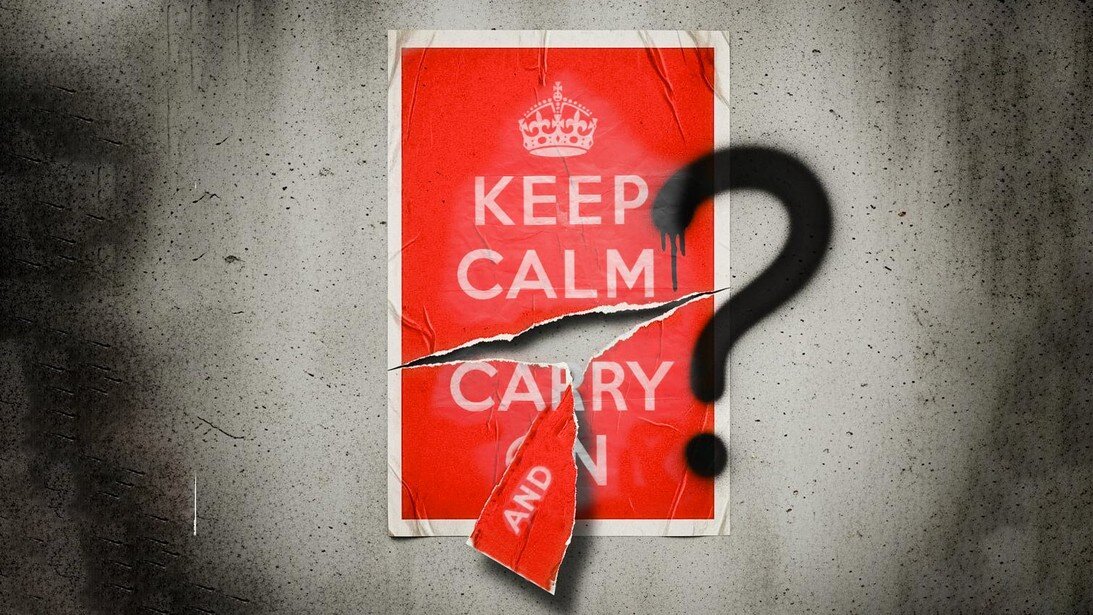
Music has a way of dealing with all sorts of struggles, even the ones that come while trying to create with the gifts God gave. You end up feeling like heaven is being forced to marry hell, wondering if God is near or far as you wait. Psalm 10 meets us in exactly that cry.
The following study questions are AI generated and may contain errors.
This transcript has been automatically generated and may contain errors.
Music has a way of dealing with whatever struggles we encounter. Music! It says it’s on. Can you turn it up maybe? Music has a way of dealing with all sorts of different struggles, and sometimes those struggles are even in the creating of the music. One example that came to mind that I was thinking about this week, one of my favorite bands, Sixpence None the Richer, they were like a perpetual struggle with music production.
After they came out in the early 90s, they were kind of an indie alternative Christian rock band that did pretty well while they were sort of below the radar. But then their label started to have financial trouble, and it started to want to make them act more like all the other Christian bands, play like them, and then the label got passed on to another owner, and they wanted them to tour without being able to actually fund the touring, and it turned into a giant mess.
Finally, they announced that they hoped someday to release another album, but they wouldn’t release it unless they could get released from their label, because they just felt like they were—they had this calling, this calling even from God. They’d been given these gifts, but they couldn’t actually do it in the situation they were in. Their best-selling album, Sixpence None the Richer, eponymous—it has the same name as the band—ended up being the story of struggling to create the music.
It’s sort of striking to me if you listen to some of the lyrics, and you understand that backstory. The third song on the album has the verse: “And the battle will never end well, you can’t marry our heaven to your hell.” As they sang those words, as they reflected on the situation, and you understand where it is, it makes an awful lot of sense. All the worldly battles we face to try to do the things that we think God’s called us to do, and it very much feels like the kingdom of heaven working through the gifts that we have can sometimes feel like it’s being forced to be married to hell itself.
How does that work? What do we do? Well, we cry out to God, right? That’s where we find ourselves in Psalm 10, but as we do, the challenge is oftentimes it feels like we’re waiting, and appropriately that song is entitled The Waiting Room. It goes on later on, it says: “I guess I should ask, do I go quietly down? Do I scream when I’m bound? Are you coming to open the door? Are you near? Are you near? Is it far?”
Because as they were writing that, and as they were trying out their songs in little venues that wouldn’t get the label’s attention, as they were trying to get out of this contract that wouldn’t allow them to actually produce the music they felt called to produce, well, they thought that God had called them to do it, but they weren’t really sure when God was going to answer. And I think a lot of us can connect with that, because there are an awful lot of things that we go through that we wonder: is God going to answer?
And we say, okay, I know where heaven is calling me. It feels like I’m instead encountering everything that’s opposite of heaven. And so I’m crying out to God, but is his plan, is his will, is his correction of the situation near? Is it near? Is it far? And we wonder, God, you’ve given me a purpose in life, you’ve given me a calling. We wonder if God’s going to actually come in and help with that life’s purpose and allow us to do it. And we wonder in the silence.
Well, as we go on in Psalm 10, we get two encouragements about how God is with us in the struggles that we find ourselves in. And as we prepare to look at that, let’s go ahead and come before our God in prayer.
Father, we do struggle. We know that you’ve created us. We are either in the process of discerning or we have a sense of where you’ve called us to be and what you’ve called us to do. But then it feels like we can’t get it done. And it feels like oftentimes the very gates of hell are fighting us. And we don’t know what to do. As we come to your word tonight, would you remind us that you are with us? Would you guide us as we read your word that you would apply that truth, that comfort to our hearts, we pray. In Jesus’ precious name, amen.
We’re going to pick up in verse 16 tonight with the first encouragement, which is that evil is eventually going to lose its grip. It might feel like evil has its grip on us, but evil will eventually lose its grip. Notice what the psalmist says: The Lord is king forever and ever. The nations perish from his land.
Now, if you recall over the past two weeks as we’ve been looking at the beginning of this psalm, the tone changes here dramatically because the question’s been, why is evil being allowed to get away with everything? Why does it happen? God, do you remember you’re afflicted? And now here, there’s this shift.
The Lord is king forever and ever. The nations perish from his land. And that shift isn’t because the psalmist hit his head in the middle of the psalm and forgot what he’d been praying about. Oh, I’ll say some wonderful things about God. No. It’s because in the midst of his challenge, he comes back to the truth that he knows. And we’ve been hinting at this over the last two weeks, but here we get to the heart of it.
It starts with the truth: The Lord is king forever. Whatever else opposes the Lord, whatever fights against his purposes for his people, including you and me, how’s the one who’s king? How’s the one who’s in charge?
And then he goes on to the particular problem. He says the nations, the nations will perish from your land, from his land. And this is kind of interesting. There’s been some debate on exactly what’s in view here as far as the nations because if the nations are outside the land, well, that’s pretty clear, right? Over and over again in the Old Testament, if you see the phrase the nations, it means those that aren’t following the Lord who are opposed to the Lord. Well, it still clearly means that, but given that it says from the land, it seems to imply at least partially the problem are people who would claim to be following the Lord but aren’t and seem to be fighting against his purposes.
So some of what’s in view, some of what’s in view, the enemies from without, the enemy nations that hate the Lord and his covenant with his people and what’s going on, it could be, but it also comes to a much more familiar thing for I think us, which is the people who maybe talk a good talk about following God and say that they’re followers of the Lord but seem to constantly work against his purposes and seem to be willing to work against us even when we actually are being faithful, and of course we need to check ourselves. Sometimes it’s because we’re not being faithful, but we say, yeah, I’ve prayed, I’ve read his word, I’ve gotten good advice from godly people, and I know I’m doing what’s right and yet I’m still bumping into it.
That’s the kind of person I think is in view here, the one who’s hypocritical, the one who likes to have the title but doesn’t actually want to follow the Lord. But here’s the thing that we know: those people won’t triumph. Psalm 9:12 says, “For he who avenges blood is mindful of them; he does not forget the cry of the afflicted.” And after the last few weeks, it sort of felt like, well, does he remember the cry of the afflicted? Where we arrive here is, yes, he does.
What was true in Psalm 9, which is connected to Psalm 10, is also true in Psalm 10. It might not feel like it, but it’s true. And really the path of Psalm 10 is demonstrating what’s so essential for us as we seek to follow God.
It’s okay to come to him with the raw pain and emotion that we feel. That’s why we keep coming back to music as we’re going through this series. It’s so appropriate because really music is often what we associate most with our emotions today, right? Maybe we’re not overly emotional, but when no one’s listening, we turn on that song that just hits right where the pain is, and we relate to it.
It’s okay to feel that. It’s okay to struggle with that. We also don’t want to become defeated mourners who stay there and don’t at least have an eye to what God is going to do. It doesn’t mean the pain goes away. The pain didn’t magically go away here.
God is going to work. He is going to work here, but it hasn’t gone away between the verses. It’s that the psalmist remembers in the pain the truth. Holding that truth and that pain together is so important for healing. A lot of times we live in the reality of the present so deeply that we forget the reality of the future to come. We forget the power of the Lord, that he will make everything right.
That’s the hope we have. That’s why we’re here, right? We’re here because we are a people who follow the God who will make all things new. Sometimes we forget that. It’s really easy to forget.
You ever go by a large dam, for example, if you go down to Table Rock or you go to Lake of the Ozarks and you go by the big hydro dam, it’s kind of a jarring thing. If you haven’t gone up close to one of them, you really should sometime. It’s even better, incidentally, we’re coming up to the anniversary of 9-11, it was even better before 9-11 because it used to be you could go into the dam and take a tour, at least the Table Rock one. You go into this giant piece of concrete and it’s just quiet and cool.
You can see the walls feel kind of damp. You go into this giant thing and it’s very quiet. You go on either side; it’s tranquil, right? There’s a nice big lake on top, there’s a smaller lake on the bottom. You can feel like you’re out in the middle of nowhere, and everything’s just perfectly quiet. But somewhere in your brain, you start to confront something when you’re standing there and you realize that you’re, say, 500 feet below the water on the one side. You realize there’s an enormous amount of power there.
It’s not happening right now. It’s not doing what it could do, but it’s there. In fact, it’s holding something back, right? If you put in one of those dams, it controls flood water so it doesn’t flood as much on the lower side. That’s why we have all kinds of dams throughout our country to do that. And so you realize it’s withholding something and if it vanished in a moment, if it catastrophically failed, we would encounter the incredible power, but it’s being held back there.
And then the water gets too high and they open the floodgates and start letting some of it out. It’s not just metaphorical floodgates at that point. It’s coming out, right, and you see the raw power. Still not the full power, but the raw power.
When we think about how God works in the world and we go through his word and we get these little moments where he doesn’t let out his full power. Who could stand if he let out his full power? But he lets out enough of it for us to understand, right? If we see the dam letting out the water, we start to understand just how powerful water is.
And if, for example, the psalmist is going through this song, going through this prayer, he reflects back to those times God’s opened the floodgates a little. If we as believers today read his word and see what happened when God rescued his people from Egypt, what we see happening as Jesus ministers to people during his earthly ministry is we see those things.
We’re not seeing the full power of God. God has a lot more power. He’s withholding so he doesn’t destroy us. But we see something of it. As we see that something, we’re reminded, well, it might feel like I’m defeated right now. It might feel like I’m in that waiting room wondering, God, where are you? What are you doing? How are you going to work? But hidden in the details, he’s there.
It’s okay to feel the pain. God’s not saying not to. And I think that’s something so important for us to take away from Psalm 10. But he doesn’t want us to be hopeless in the pain.
And I think one of the things that we sometimes do is we mistake God’s withholding for hopelessness. I find myself sometimes asking, as I reflect on the truth here, where am I doing that? Where have I said, okay, God’s not acting in this moment, so I’m just going to feel hopeless? But God says, understand, if I’m withholding, my power is still there. I haven’t forgotten you and I’m not unable to act. There’s some reason I’m withholding right now. The power’s there.
Now, conversely, another thing we have to watch, though, is as we reflect on this truth that the Lord reigns forever, and then sometimes he does choose to open those floodgates, and we see we’ve been praying about something, praying that someone recovers from a medical condition. And what do you know? We see God working and we see someone get better.
And, you know, we as a church, we prayed for people and had the joy of seeing someone get better that we didn’t think was going to get better. And, you know, sometimes that goes to that withholding for hopelessness, right? Oh, that person, you know. And then I’m ashamed. Oh, no, God has another, has something still for that person to do. He’s not going to, didn’t slip by God.
But the other challenge there is that we start to think that how we know that God is actually victorious and how we know that we’re actually moving along properly is suddenly something comes together. That a momentary victory in this life is the victory we’ve been praying for. That’s not true either, right?
No matter, unless Jesus returns before any of our lives end, even if we pray and we see someone healed, here is the truth: That person’s still going to die. Sometime God’s going to say, no, that’s not my will. So we get that victory, but then we’re back to what feels like defeat.
And if we mistake that as being the real victory, that being really the fullness of God working, then it ends up taking us right back to feeling defeated because if the Lord, as the psalmist says, is king forever, the nations are going to perish. The opposition to God is going to perish, but it doesn’t work out long term.
What does that mean? It’s one of the striking things, I think, going back to that album. The album was later modified, but if you go back to its original last track, it’s a song called Moving On. It talks about moving on from all the bad things to this new path that the band’s supposed to be on.
That’s a good thing, right? If God answers and allows the opportunity to do something, we should celebrate that. But if that means, oh, I know God works because this happened, what do you do when what happens next happens? Because guess what? Their new label ran into financial trouble, and they ended up in limbo again where they couldn’t put out another album for years. Then it happened another time later on. They’ve released very few albums for the number of years they’ve been a band because they keep ending up with labels that go bankrupt.
If that momentary success was the thing where you decide, well, clearly the Lord is working, or clearly the Lord isn’t working, we’re going to end up in despair because all of us are going to end up in situations like that where, okay, God’s victorious. Oh, wait a second. I guess God’s victories don’t last.
Yes, as the Psalms reflect on the kingdom under David, there is victory, there’s all kinds of great things, but what do you do a century later when you come back to these Psalms, but the nation’s falling apart and has lost its way and isn’t following the Lord?
If our momentary needs or the completeness of how we understand whether God’s working or not, we’re in trouble. We celebrate momentary successes, but our goal is elsewhere. That’s what we need to remember. And we need to remember, even in the Psalms, we pray for those momentary victories. That’s not the ultimate thing that God’s answering us on. Does God help us? Yes. Does he help us in some of those momentary ways? Yes, but is that really what he’s trying to do in our lives? Is that really ultimately what he is going to do in our lives? No.
Verse 17: “O Lord, hear the desire of the afflicted. You will strengthen their heart. You will incline your ear.”
Notice that the next part of saying that God is victorious and he’s going to hear our prayers isn’t, and you are going to vanquish every problem that I’ll ever experience, every problem that anyone who follows you will ever experience. It will all be good right now.
Notice that you will strengthen us. You see, so often when we come to God and we pray, God, help me through this problem. I don’t know what to do. His answer isn’t to eliminate the problem but to give us strength to deal with the problem.
What do we think we need most? I think normally we might say, well, whatever I’m working on, maybe it’s at work or at school, maybe it’s something around the house, maybe it’s with family or friends, you say success in, and just put in the blank there.
Well, what is it that you need help with? We think if that thing were solved, then I’d see God’s victory as answer to prayer, and if it’s not solved, then I guess not.
But what does he promise to provide? He promises to provide strength wherever it is that he is placing us. And sometimes it’s going to be tied to actually being able to move on from a bad situation and see it come together, but sometimes it’s simply going to be that God is going to come and give us the ability to deal with it. Doesn’t mean he doesn’t care. Quite the contrary, it means he’s right there with us.
Sometimes we’re going to get those immediate results when we’re plowing along with what God’s called us to and praying and pleading and pleading, and we just don’t know why we’re waiting, and finally he doesn’t have us waiting any longer. But sometimes they say, I’m going to have you wait longer, and the Psalm doesn’t varnish that. Sometimes people do. We hear teachers of God’s Word who will try to make it sound like that’s not going to happen, but the Bible itself is blunt about it.
As Craig Broiles says, the Psalm never retreats from reality. It’s perfectly content to tell us exactly how it is. It’s going to be uncomfortable. It’s going to be painful at times, but that doesn’t mean that God’s missing. Doesn’t mean that he doesn’t care.
2 Corinthians chapter 12, Paul says, “Three times I pleaded with the Lord about this, about the thorn in my flesh, that he would remove it, that it should leave me. But he said to me, ‘My power is made perfect in weakness.’ Therefore I will boast all the more gladly of my weakness, so that the power of Christ may rest upon me. For the sake of Christ, then, I am content with weakness, insults, hardships, persecutions, and calamities. For when I am weak, then I am strong.”
God isn’t missing when he has us waiting. God isn’t missing when he says, I’m going to leave you, but I’m going to leave you right where you are. No, it’s not that he’s failing to move. It’s that he’s moving us. He’s moving us into position to do what it is that he’s called us to do.
It’d be a lot easier, Paul says. I have this great mission. God has this purpose for me. It’d be so great if I could just get rid of this thing. We’re not told what it is, but this thing, this thorn in my flesh, if I could just have that removed, I could do so much more for the kingdom. And Jesus says to him, know my strength is sufficient for you. I’m going to be your strength. Quit depending on what you could be if this one thing were removed and instead depend on me. I’ll be your strength.
Jesus calls us to trust in him and realize that he’s right there, right now. We miss it sometimes. We miss it a lot of times.
Over here, you may be wondering why we have Jesus on poster boards here. We don’t normally, but we do tonight because Sandy brought these posters. And you can’t really see it. You have to come up after service if you’re here in person. I’ll get some pictures that I can share with our online family.
But we have the big Jesus letters here. But if you look closely, she’s put down every name that she could find in scripture that refers to our Lord. And it’s just amazing. You have to come up and look at this. And then you should talk to her afterwards because it’s just beautiful when you see over and over again in the Old Testament and New Testament the picture of Jesus woven through the story of redemption that a lot of people when it was first written completely missed. And a lot of times we miss as well.
But here it is. Here it is all written out for us to see. And you think about that. This was a decades-long, a little over a decade, I believe Sandy said, long project that she’s been working on putting this together. And there really are so many scriptures you can pull together, so many different ways that you can see that scripture is alluding to or directly referring to Jesus that we can miss.
And it’s just the way it is in our lives. Because we might not be able to look at our lives like a book of the Bible and say, “Okay, here’s that word and that word must mean Jesus.” But you know what? There’s times that Jesus is moving that we don’t even see, just like people read through the scriptures and they don’t see it.
And as we see all those different names, maybe ones that you’ve read through the Bible before and you’ve seen those references and you’ve caught what’s being referred to there and how it’s weaving towards what Jesus is going to do for us or reflecting back on it. And other times that we just miss it, you know, the same is exactly true.
And likewise, sometimes we miss how God is going to use that presence that he has in our lives to use us. We’re going to find ourselves in a tension if we’re following Jesus. Sometimes we’re just going to want to cry out, and if this psalm were written in the New Testament times, I think it would actually say exactly what John says at the end of Revelation, “Come quickly, Lord Jesus.” Sometimes that’s exactly where we’re going to be, and that’s a perfectly biblical good thing, right? It’s good to be in distress, to be overwhelmed, to just be anxious, to experience more of God and to say, “Come quickly, Lord Jesus.”
And sometimes we’re going to be in the place where God wants us just to reflect on what Jesus said to his disciples as he prepared to ascend into heaven: “I am with you always, until the end of the age.”
We call for him to come fully, but he’s right here even in the places that we can’t spot. Even when it just looks like some big letters and we don’t realize all the things written around it that point to what God is doing in our lives.
One thing I’m crashing down on is when the label that promises to publish our album goes broke. When you go into work and you get that pink slip, or you’re going to school and you worked really hard on a paper, and the teaching assistant doesn’t get what you were trying to do, and you get a low grade, and it feels like it’s a dead end.
I think, God, what are you doing?
Kind of interesting if you look at the life of Van Gogh, Vincent Van Gogh. One of the most famous artists of all time. If you know any art at all, you probably know something about Van Gogh.
But one of the things I think is most interesting about his life is that he was barely known during his lifetime. He was only just in the last year or so of his life getting any attention at all. It was only sort of in the in-crowd that really knew art. It wasn’t in the general population. You couldn’t go someplace else outside of his town and say, “Oh yeah, Van Gogh,” and everyone would say, “Oh yeah, you know the artist that paints all those really lovely pictures and cut his ear off.” They didn’t know who he was.
He died. His wish was that his brother would make sure his art was known if he couldn’t, and then his brother died. But his brother’s wife, Jo, decided that she was going to accomplish the mission. And so using an incredible amount of wit and wisdom, she sold certain pieces but only to collectors that had public galleries that they could show it so that it would become better known.
And she opened up a place in a town with artists that people could stay so they’d see the art on display. There’s a lot to be said that she was one of the key reasons why today I can say Van Gogh and most of you probably know something about what I’m referring to.
She was going to get that done. But Van Gogh didn’t get to see that in his lifetime.
So was he a failure? Was he a failure because as he prayed, well, I don’t know how much he spent time in prayer, but as he hoped, as we pray for something, if we don’t see the success, does that mean we were failures? Or could it mean that God’s plan just is bigger than a lifetime?
Was his art a failure because he didn’t get to see it succeed? No. No, it’s some of the most successful art in history.
And likewise, when we’re praying and it seems like the nations are still there, those who are opposing whatever it is that we’re supposed to be doing that we know, we know that God’s called us to do. We’re not deluded in it. We actually know and it’s true. Does that mean that we’re failures? That God doesn’t care? No. No.
Sometimes he says, I’m going to leave that thorn in the flesh. Sometimes he says, yes, I know the nations are there and they’re rebelling against me, and you know what? I’m going to give you strength to withstand it.
If our hope is in doing what God made us to do, well, that’s a good thing in as much as we’re focused on God. But if it becomes, and seeing that thing succeed, we’re going to find those times. Inevitably, every one of us is going to have those times where it doesn’t feel like a success. It feels like a failure. It feels like God’s distant.
How often do I find myself praying to God, trying to figure out how to accomplish something I know, I know he wants me to do. It feels like it just isn’t coming through. It just isn’t working, and I wonder if it’s a failure, if he doesn’t care.
And he says, no, I care. You’re not failing in that. I’m telling you I want you to hold on to my strength in that.
So what the psalm is really directing us to do is to take those prayers, those cries that are perfectly legitimate to come to God and say, God, I need help with this situation, and then move into, God, give me the strength to handle what I’m called to do in this situation.
Because when I’m facing opposition, whether it’s actual foes, people that want to oppose me, it’s my own inner weakness and sin that’s opposing me, whether it’s just circumstances that are opposing what I want, what I come to God for, I want him to give me strength against those foes.
We want strength against our foes, and God says, what I want to give you is strength to hold on to your God.
He gives us strength to hold on to our God. He gives us strength to hold on to our God. That’s our hope tonight—to see all the promises, all the ways he’s working, all the ways we see part of something, we see the giant S, but we miss the—the big letters are spelling out the same one who is the man of sorrows and our potter and the Lord of hosts and our lawgiver and the sign and the child of Jesus and the Lord of all and the king of the ages and the king of the Jews and the king of kings and the king of Israel and the king eternal and on and on and on, all these different things.
All those are part of him working.
You know what, when David received that promise that Jesus would be all those things, he didn’t know what it meant. He didn’t get to see that all in his lifetime. And as God’s talking to you and we’re crying out, God, give me strength to hold up against these things, he’s saying, don’t have, ask strength to hold up against the things that are opposing you and causing you to stumble.
Ask for strength to hold on to me, and I’m the one who’s strong enough to face everything.
Let’s pray tonight that we would recognize that strength.
Lord, we come before you as people who are weak, people who do stumble. Sometimes it’s from the outside, others opposing. Sometimes it’s people from the inside of your people that we think would be encouraging and aren’t. And sometimes it’s completely internal. It’s right inside ourselves.
But Lord, as we reflect that you are the one who is the king forever and that your reign will not end and that you will have victory, help us to see the victory that you’re calling us to experience right now.
Right now is the victory of holding on to you that you give us the strength to do.
Now, whatever we’re facing, we just say, Lord, give me the strength to hold on to you more in this. I want to hold on to you.
We know that you answer that prayer and you are faithful to do it, that you are faithful to work.
As we hold on to that, we do look to the day that you will wipe away every tear and that you will make all things right. But in this moment, we know that things are right as our God walks with us.
I pray in Jesus’ precious name. Amen.
Start the Conversation