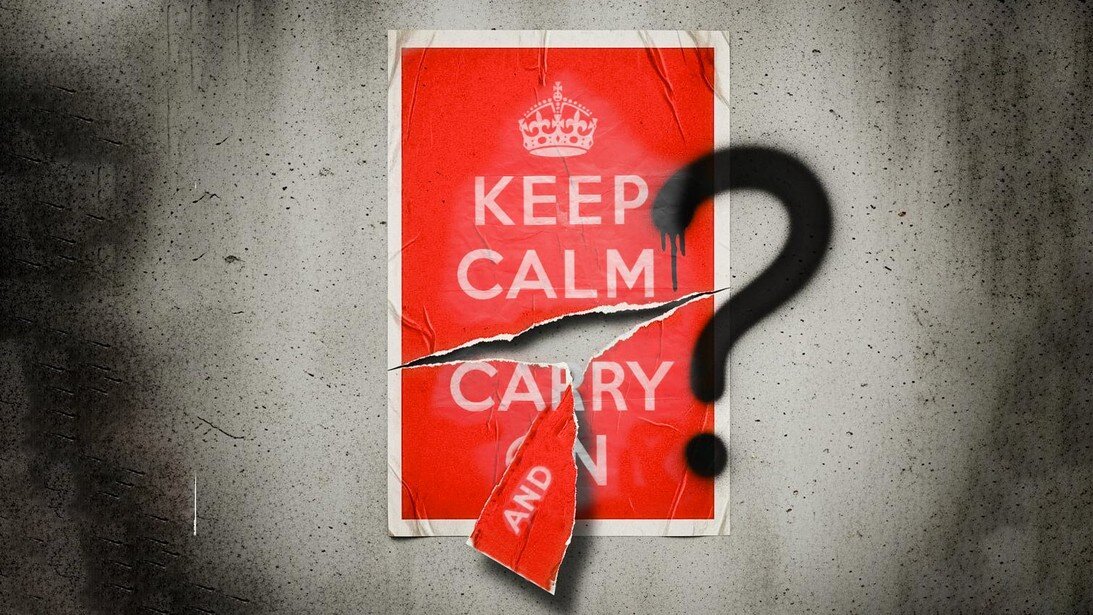
When the wicked seem to win and justice feels nowhere in sight, fury rises faster than faith. At the close of Psalm 10, God does justice for the fatherless and the oppressed—that’s the firm promise. As we look to that, will we choose faith, or will we choose fury?
The following study questions are AI generated and may contain errors.
The sermon contrasts “faith” and “fury” as two opposing responses to injustice and suffering. How do you personally struggle with choosing faith over anger when confronted with wrongdoing or tragedy?
The preacher emphasizes caring for “the forgotten”—those without a voice or platform—rather than focusing attention on high-profile cases. Who are the overlooked people in your own community that God might be calling you to serve?
The story of Kenneth Walters’ sister demonstrates “quiet, painful grudge work” rather than public outcry. What are the challenges and rewards of sustained, behind-the-scenes service compared to more visible forms of activism?
How does the sermon’s teaching that “vengeance is the Lord’s” change the way you think about justice in current events, whether on the national or personal level?
The preacher argues that focusing on evildoers actually makes us more like them rather than more like Christ. How might shifting your focus from those who do wrong to focusing on God’s character transform your response to injustice?
This transcript has been automatically generated and may contain errors.
I was having breakfast listening to the radio, and the CBS News update came on KMLX. I still remember—it was about a plane crash. Oh, I mean, sad, but wait, there’s more to it. We all remember that. Our brother Greg noticed that he could see the smoke cloud out his window. Some of us, it’s very present. Some of us, it’s just slightly more removed, where we knew people affected by it. And then some of it is just how all of us were affected. It changed things, right?
And then I saw someone ask a question this week, someone who was young enough not really to remember 9-11. He was reflecting on Charlie Kirk’s assassination and said, “Is this what it felt like on 9-11?” That was an interesting question. I was mulling that question and I thought, you know, yes and no. I think my answer is yes and no. Yes, shock. We’re not used to, as a country, political assassinations. We have lots of security around the president. We’ve gotten a close brush last year with a presidential candidate and former president who’s now the president again. But thankfully, thankfully it’s rare, incredibly rare here. And so it’s jolting.
I think I saw someone saying, I thought, “Yeah, this really hits it.” This time it wasn’t someone who was in power and someone was trying to change that person being in power. It was someone expressing ideas and having debate. And so, yes, it did sort of feel like 9-11. Something feels like it changed. We’re trying to figure out how to make sense of that. But I also thought, no. Because I remember right after 9-11. It was horrifying and we were shaken deeply. But you know what else happened? We saw people pull together. We saw people come together and say, “Okay, we’re together; we are Americans here now.”
And then the rest of the world— I remember people around the world saying, “Well, I’m American right now,” even though I’m not, I’ve never lived there and I never will live there, because we’re just with you. And it was just this beautiful picture of unity. It hasn’t quite felt like that this week, has it? Not a lot of anger. A lot of anger.
But the other thing, as I was reflecting on the difference, it dawned on me, though, as beautiful as that unity was, it didn’t last. I think that’s telling. We can talk unity as human beings. Some people that love Charlie Kirk have been talking that this week. Some people that really dislike Charlie Kirk have been talking about trying to pull together, too. I’ve seen some beautiful indications of just humanity this week. But it hasn’t necessarily been the prevailing theme, right? But even if it were, we’re not strong enough. That’s what we were talking about earlier. It’s the strength that we get from the Lord that gives us any opportunity for unity when we’re trying to do it on our own, when we’re trying to say, “Okay, this was really bad. We recognize it’s bad if people are killed for their ideas. We love those ideas. We don’t like those ideas. It doesn’t matter. It’s bad if people are killed for their ideas. Okay, we’re going to pull together.”
But you know what? We pull together, and then we say, “But this person’s ideas are just, yeah, I don’t know about those ideas.” We break back apart. Human inclination is much more prone to fury than living in the faith that something better is coming.
As we come to the end of Psalm 10, I think where we’re really challenged is, are we going to choose faith, or are we going to choose fury? I think providential that we’re on this passage this week. It’s been planned for quite a while. But as I was thinking, I thought, this is one of those places where it’s so beautiful. God works. He aligns everything just where it needs to be. I believe this is the challenge that he wants us to grapple with as we try to sort out where is our place? What’s our role?
As we do that, let’s pray that our God will apply his truth to our hearts. Will you pray with me, please? Father, we remember the pain of past events, what’s happening right now. We’re trying to sort that out, the assassination. We’ve also seen other horrific things that shake us over the last few weeks: school shootings, murders. We see the wars around the world. We remember back to how so much changed after 9-11 and the wars that rolled there from, and the reminder that while we felt like maybe we were safe, we were reminded that we very much weren’t. Remember all those things, and it’s a challenge.
We know where our human impulse wants to go. Call us to something different, Lord, and would you help us, not just on even the big, grand, national, or world matters, but on the things that are burdening our hearts, that are in our everyday lives, at work, and at home, and at school, and in our community, that we would be those who choose faith in you and your victory over a natural, sinful human response. Will you help us to see how we can do that through your love? We pray this in the name of our Savior, Jesus. Amen.
Well, just as Dusty’s song did, through Psalm 10, we’ve been on a journey of, “Where am I?” Where am I in the picture of your plan, God? Because it seems like those who are evil are triumphing. Where am I? And then we got to the point where, well, let’s remember God’s faithfulness. Let’s turn to that and see, yes, God is faithful. We’ve seen past faithfulness. And then it’s a question, okay, am I going to actually live that? Is that where I am? And that’s where we’re challenged to be.
We’re going to turn to verse 18, look at the first half to start tonight. What’s God going to do? What’s his ear going to hear? He’s going to do justice to the fatherless and the oppressed. After all that talk about the evildoers and what they’re doing and how they seem to be getting away with things, and God, how are you going to do this? Because they’re mocking you and they’re seeming to get away with it. As we conclude the psalm, we’re told that God’s the one who cares about the fatherless and the widow, the oppressed. That is, those who were most marginalized in society, those who didn’t have a voice, those who didn’t have anyone to watch out for them, those who were taken advantage of quite frequently, those who struggled to hold on to any hope, that these are the people that God cares about. They’re not overlooked by him.
They rob children of their parents, and parents of their children. We’ve been wrestling with that this week, right? So many people have been talking, and I’ve heard from quite a few of you just have seen what you’ve been posting and processing, trying to think, and again, trying to think about someone being assassinated and then thinking about his young family and where are they at? We see it on the national stage. God isn’t just focused on the national stage. He says, all the more, the person’s never known.
One of the things I love that Shelley does in her ministry when she’s ministering to the kids that are in the dump, and you think about that, the beauty of taking those kids and saying, “You have value, God knows you.” How many times would a worldly view do that? We might, if we can hold them up and say, “Here, I’m important, I’m caring for somebody.” Where God’s challenging us is to think about how we do that in our lives. And to do that because we know that God’s going to have the ultimate victory, and his victory is one where those who would oppress or even ignore those people, they’re not the ones that are going to get the victory. God is. And the people that, it doesn’t seem like they have hope, that they’re living a psalm, that they are without hope, are the ones that God says, “I haven’t forgotten you.”
Now sometimes maybe we feel like we’re one of those people, right? We feel forgotten. We’re going through life, and life is running by us, going in all kinds of different directions, and the people that will bend the rules and do what’s wrong will, they seem to be getting ahead. God says, “But I haven’t forgotten you.” We could love to take advantage of those who are most easily wronged and think it doesn’t matter, no one’s going to see, no one’s going to care, and God says, “No, but I do care.” Let me say, but it doesn’t always seem like it. It seems like a lot of times wicked does prevail.
On 9-11 it seemed like evil prevailed as we watched the horror of people jumping out of the building, trying not to burn to death and plummeting to their death. It was hard to think that good prevails. But God sheds light onto it. God sheds light onto it. When we try to do it, things go off kilter a little bit, right? But God brings light to it.
Because the thing that he’s calling us to do in those moments where we feel overlooked, those moments where it feels like everything is going wrong, it’s not to look at our circumstance in the moment, it’s not to look at what we can do but to look at him. And the companion to this psalm, Psalm 9, take a look at verse 8. It says, “He’s the one that does justice,” verse 18, to do justice to the fatherless and the oppressed.
Now, as we’ve seen these two psalms echo each other, Psalm 9 is a bit more experiencing that in the moment. Psalm 10 is more, “I’m praying because I know I will experience it.” But I think the beautiful thing about verse 18 here, and then the 17 that leads into it, to the fatherless. It doesn’t say, maybe you will, you might, you will, God will. And when we can’t see it, it doesn’t change that. God will.
So what do we do? Does that mean that we just sit back and say, “Well, it seems like everything’s horrible in the world, it seems like everything’s broken in the world, and it seems like I can’t do anything in this world, so I’ll just try to survive, and someday God’s going to right it.” Is that where this is leading us? No. It’s saying, because we know that He has the ultimate victory, we can value the things that He values, even when it doesn’t seem like it’s going to secure victory for us. We can care for those who are forgotten, the fatherless and the oppressed. We can care for them, even though it doesn’t seem to be getting us to a place of victory, a place of security, necessarily.
Why? Because we know that’s what God is ultimately going to do. That’s where our Father’s heart is, that He cares about everyone, including the people, especially the people the world says it has no regard for. And so we can show our Father’s love to the world. We can do that because if we actually live that He will do this, it doesn’t mean that everything will go smoothly, but what it does mean is that God is faithful, even when it doesn’t.
Now, I think one of the things that God is challenging us to do here is not to favor the flashy things we can do to show God’s love. We can come up with flashy things to do. We can care about those who are the fatherless and the oppressed when the cameras are pointed at us, when there’s a big event and everyone will see us do it. Maybe it’s in our community: we go and we serve food at a soup kitchen when we know that people that know us might also be there. Or maybe when we’re invited to do something else, and we can say, “I can’t because I’m going to go serve at the soup kitchen.”
It’s one of the things that’s interesting, and I think it’s challenging when we see an outpouring of support for someone who is in the limelight. Everyone that’s empathetic at all sees someone who’s newly widowed, someone whose husband’s been assassinated and wants to help her. And I think that’s good that people want to help Mrs. Kirk. I’m not saying that that’s not good. But you know what? She has people around her who are going to help her. I think what we see when we see her pain is a reminder there are people that you actually know, that I actually know, that I actually can go talk to and pray for and help that are feeling the same kind of pain.
And it doesn’t mitigate her pain at all, but it’s a reminder she has a church family supporting her, she has a whole lot of people supporting her. Who is it that no one would be impressed if you said you were helping? If you said, “I’m helping someone who’s been talked about in the news,” people say, “Oh wow, that’s pretty impressive.” Who is it that you’d say, and they’d say, “Who is that?” That we can help. No one would care that you helped. No one would care that I’d help.
You know, in my own battle with my ego and my sin, if I could say someone that people really know, “Yeah, I was helping him, I was helping her.” It’s kind of tempting to slip that in and say that. But God’s saying, “Here’s where my heart is. It’s the people that no one wants to help. I’m their help, I’m their refuge.” And if we’re going to have the Father’s heart, those are the people he’s calling us to help too. Who are the widows, the fatherless, the forgotten around you and around me? Because if we truly believe that God has the ultimate victory, and so it’s not about making sure that we’re secured in some place, that people are going to respect us, but simply doing what God cares about, we can care about those people.
God says, “Go and do it.” Because God’s placed someone in each of our lives that needs that kind of encouragement. It’s gone through horrific and painful things, and God’s saying, “Go and comfort my people.” Some ways it’s, I think, safer when it’s someone that’s on the national stage, because we don’t actually have to get personally involved. It’s not going to be that we’re going to do a 3 a.m. phone call or have to rush out to the hospital. We’re not going to have to do any of that. We can post on social media. We can be angry.
When we’re actually talking to someone we know, it’s a question of, “Well, can we actually help? Are we going to help? We’re going to choose faith over fury.”
A man by the name of Kenneth Walters was arrested in 1983, charged with the murder of one of the customers to his diner. The murder had taken place several years before. He had some friends who were not very happy with him any longer and decided to accuse him, even though he had an airtight alibi. He’d been working at the time of the murder. He had been around other people at the time of the murder. His fingerprints were nowhere around the murder scene, and the DNA they had found on the murder scene—and the precursors, they weren’t doing full DNA research yet at the time or testing—but everything pointed to exonerating him.
He went to prison for 18 years. He had a sister who knew that he was innocent. The question was, what was she going to do about it? She could go and protest. She could go and get angry. But what did she do? She was also raising up her little kids. She decided to go get her GED, go to college, and go to law school because she was going to exonerate her brother. And in 2001, she did.
What did she do? It wasn’t the most showy thing. Now, years later, her story’s told, but she didn’t know that. All she knew is she could either just scream and try to make a loud sound and everyone would say, “Oh yeah, we feel really sorry for you,” and there’d be this moment of sympathy, and her brother would still be in jail, or she could actually go and do the quiet, painful grudge work of actually helping him. And so she did.
Spent about a decade, or maybe a full decade, just getting the education so that she could go and do it, that she could represent him. And then she called it the evidence and pulled in the old records from the police showing that his fingerprints that hadn’t been turned over to the prosecutor didn’t match the fingerprints on the crime scene, and so on and so forth, and brought in the alibis and brought in the records that people had been coerced into accusing him lest they be charged with various crimes. And her brother, Kenneth, went free.
It wasn’t flashy, but she did what could help. She didn’t become bitter and filled with fury. She had faith that she could help her brother and that she could do something, that she had a calling, that she had a purpose, and she was going to go and do it. Did she know that her brother would be vindicated? I think she believed it, but there sure wasn’t very much sign at the time. Someone who needed to go get her GED before she could even start on the path to going to law school, she didn’t have a high school diploma, and she decided she was going to get all the way through law school to represent her brother. It didn’t look like she was going to get there at the time, much less actually get him freed.
Psalm 10 doesn’t look like the one crying out. It’s paired with Psalm 9, which is a psalm of David, so we think this was also written by David. David’s in a time it doesn’t look like things are going very well. It sort of looks like he’s there fleeing from his enemies. The oppressors are winning, and it looks sort of like saying, as someone who’s dropped out of high school, “I’m going to get a law degree and defeat the prosecutor and get my brother freed.” It looks ridiculous. But David says you will incline here because he believes in the Lord.
That’s what we’re called to do: to understand that he is the one that will get the final vindication, that he will triumph over evil. We live with faith that Jesus will not only care about those who are suffering, those who are oppressed, but that he will right the wrongs. We see that in the second part of verse 18: “To do justice to the fatherless and the oppressed, so the man who is of the earth may strike terror no more.”
All the terror we see—there’s literal terror, terrorist attacks, right? Horrific crimes. Sometimes the much smaller ones, the ones that maybe aren’t even illegal, but a boss that decides to just let you go to make his performance look better. The teacher who thought you asked a few too many questions and gives you a bad grade even though you did all the work. All those things that affect us, big and small, that God is aware of, that he is with us in those, and that one day that will no longer happen. He’s the righteous judge.
We talked about that during our Monday night message last week, looking at John 5. Jesus tells the Pharisees, “I’m given the power to judge, and I’m going to do it.” And here we’re seeing that, not said as a possibility. Someday, maybe, there won’t be any more terror. Wouldn’t that be nice? Let’s dream about that. Wouldn’t it be like the Beach Boys? Wouldn’t it be nice? No, no, it will be. That’s why we live in faith.
But that’s hard. It’s a lot easier to say, “I know how it will be. It will be because I am going to bring about vindication. I will bring down the evildoers. I will get vengeance.” And one thing that struck me as we were going into this passage this week, I have seen so many people this week saying, “I am going to be part of getting vengeance.”
Romans 12:17 — Paul writes, “Repay no one evil for evil, but give thought to do what is honorable in the sight of all. If possible, so far as it depends on you, live peaceably with all. Beloved, never avenge yourselves, but leave it to the wrath of God, for it is written, ‘Vengeance is mine, I will repay, says the Lord.’ To the contrary, if your enemy is hungry, feed him; if he is thirsty, give him something to drink. For by doing so, you will heap burning coals on his head. Do not be overcome by evil, but overcome evil with good.”
Here’s why God cautions us, and why he calls us instead to live in the surety that’s being described here in Psalm 10. Because when we go against that prohibition, we say, “I’m going to be the one. I want vengeance. I will right the wrongs against me, and I will make sure that the people who have wronged me pay.” And boy, I’m not saying this theoretically that it’s easy to do. We’ve all been wronged, right? And when we’re wronged, when we’re a little kid and we’re wronged, what do we want? Well, I’ll get vengeance, right? I remember one of my friends as a little kid threw a rock at my bike, my brand new bike, and scratched it. And what did I want to do? I wanted to go and take a bigger rock and throw it against his bike. I didn’t, but boy, did I want to. I had it all planned out; I knew how I could do it. And it doesn’t get any easier, right? It doesn’t actually get any easier as we grow up.
What God recognizes when we seek vengeance against the wrongdoers, we don’t make them more like Jesus. We don’t even make them more like us. We make ourselves more like them. When we take God’s role, we’re saying, “I actually want to be like the evildoers,” because we fixate on them, and we start to think like them. We start to try to live like them so that we can get what we need. What we really need is Jesus. That makes all the difference.
Instead of fixating on those who do wrong, on those who wrong us, we fixate on Him. That makes us like Him rather than like them.
1 John 2 says, “Whoever says he abides in Him ought to walk in the same way in which He walked.” A lot easier said than done, but it’s our calling as Christians that we live in God’s love. It’s doable not because we’re going to, again, solve it all on our own and do it all on our own, but what do we find out later in 1 John? 1 John 4 says that we love because He first loved us, that Jesus is loving us even when we’re His enemy, even when we’re doing what’s displeasing to Him, even when He shed His blood on the cross for us, and then we go and we recognize that, and we go and we sin again, and we just ignore God’s commands and we ignore the opportunities He gives us. He still says, “I love you.”
When we recognize that, He transforms us. When we focus on His love, He turns us to Him. He makes us more and more like Him. There’s the Christian walk there, right? We’re not going to get all the way there ever. I mean, He’s God. We’re never going to become God. And in this life, we’re never going to be perfectly, even as close as we can be as human beings. But our journey as Christians is to move in that direction, that we become more like the one who loves us.
Instead of focusing on those who hate us, we say, “All I really need, all I really want to do is see Him,” because you know the thing is, when we’re fixated on those who do wrong, when we land there, we’re going to bring those things to God.
That’s what we see in Psalm 10. The psalmist is saying, “God, there’s this wrong that’s happening, and it’s okay to do that,” but He doesn’t stay there. He says, “And I want to talk about you now, God. I want to look at who you are, and what you do, and what’s true about you.”
When we make that progression, we actually have the strength to do what God’s called us to do. When we’re looking down here at earth and looking at all the brokenness in the earth— and I just waved my hands— I’m not meeting all of you, or you know, here’s an example of earth right now. I mean, we all are, but you’re awfully encouraging to me. But when we look out or we turn on the news, we go on social media, we see all that stuff, we don’t become encouraged; we become discouraged, right?
If you turn on cable news and you listen to it and say, “Wow, I’m just so much more encouraged after that. You know, that just picks me up every day when I do that.” Let’s talk. I don’t want to hear your secret, but you know, when we’re digging into it, we see the brokenness, the pain in the world.
God’s saying, “That’s not how you’re going to be encouraged to do what I’ve called you to do. You’re going to be broken down. I want you to look at me. I want you to look at my love that I have for you.”
If you’re listening to this tonight, if you’re looking at this passage here, if you look at this book here that’s before us as we read God’s word, every single page says, “I love you. I love you enough that as the God of the universe, I’m going to place this before you so you can know me.”
This is our invitation to know Him. He says, “Look at me. The world’s going to beat you down. The world is going to be angry. The world is going to be broken. The world is going to seem like it’s just getting worse and worse. But I’m the victorious king and I love you.”
The wicked aren’t worth our attention. I like what John Calvin says in reflecting on how this last phrase is phrased: “So that the man who is of earth may strike terror no more.”
We’ve been talking about the king of heaven. So what does it say to say the man of earth will strike terror no more? That little bitty guy down there that can’t actually even think to reach up to the heavens, who thinks he can stand against the God of the universe. Who thinks he can say, “God doesn’t care, and I’m going to do it,” even if God cares.
He’s that tiny little dot down there. He’s not going to win. And if he’s that insignificant, why are we spending our time there, rather than looking at the God of the universe? Who looks at us? Yes we’re little dots too, but we’re little dots. And he calls us to himself. He calls us into his presence and says, “I love you. Be part of my family.”
And so we start as those men of earth, those women of earth. And he brings us into his heavenly presence and says, “Enjoy being in the presence of your king who loves you, your father.” Not just your king, “I’m your father.”
All those dots running around on earth demand that we have fury, that we are angry, that we try to somehow make things right for ourselves and get ahead for ourselves, because no one else is going to do it and everything’s coming apart and the wicked are triumphing. And the problem is a lot of times, as Christians, you know what? That’s a lot more alluring call.
As God’s calling us to faith, we say, “Well you know, maybe another day God, but right now I think fury would be a lot better. I think I’ll go with that.” You know every time we do that, what we’re saying, we’re saying, “God I don’t really believe that you will do this, that you will be vindicated, that you will take care of the oppressed. I’m instead saying I think I need to do it because if I don’t do it, well maybe it won’t happen.”
But when we live in faith instead, we say, “I know my God’s at work.” And every one of us, it’s the truth whether we feel it in the moment or not, God is at work in your life. God is present here. We’re saying, “What can you do with the fact that you know that I love you and I’m with you? Go and do what I’ve made you do. Go and use your gifts. Use them to bless. Use them to show my love because I’m with you.”
The vindication’s already going to happen. The victory is already going to happen. You’re not going to secure it. You’re not going to bring it forth. You’re just going to go and be my hands and feet showing my love.
Stephen Jay Lawson said one day it will fall on the earth and all who oppose God, it will fall into the hands of the living God. That’s what the psalm is declaring. It will fall into the hands of the living God. He is in control.
And so let’s live as those who know that he’s in control.
Our friend Dusty, as he was singing, was singing about “How long must I be living a psalm?” And I don’t think any of us really want to. None of us want to live Psalm 10. But God gives us these psalms because he knows that we’re going to live at times in this fallen world in what feels like Psalm 10.
Sometimes we live in a more joyful psalm. Sometimes we come back here though and we think, “God, why am I living in Psalm 10? Why am I here?” And the thing is, Dusty’s story, it’s not just his story. It’s the story of each of us. God puts these words down because it’s really just a paraphrase of what God talks about in this psalm.
Each of us lives that story at times. The question is, are we going to come to the conclusion that it isn’t going off out on a limb? Just doing the most rational, clear, sensible thing we could possibly do is just say, “I’m going to keep being faithful because I know that God is with me.” Or I’m going to start being faithful because I know that God says he loves me.
But we hold back and trust because that ain’t no limb. We’re all Dusty.
On your chair, hopefully you got one of those little cowboy hats and scrolls. The hat—well, of course, we had to use some high-tech stuff to bring Dusty’s hat down into that little hat that you can have there. The scroll has the words of his song. See, Tom’s showing off there. You can have the latest fashion. There’s the words of his song in his hat.
And I hope maybe you’ll put those someplace and when you’re feeling discouraged you’ll be reminded not just of Dusty, not even primarily of Dusty, but of the God that’s being sung about. The God who’s in Psalm 10. The God who is faithful. The God who says, “Yes, I know you want to act in fear,” and you can bring that to me. You can describe that as the psalmist did here. “Yes, I know you want to act in fury,” and yes, you can describe that here. That is appropriate.
“I’m your Heavenly Father. I’ll take that. I want you to bring where you’re feeling to me and place that before me. I want you to know that those are gonna be failure. But I’m not going to be.”
So live in faith. And as we live in faith, we live in his success and his victory and his ultimate triumph.
Faith triumphs over fury, not because it always feels like it in the moment, but because the King whom we have faith in already has the victory.
Today and every day, may we trust in him. Pray with me, please.
Lord, we come before you, and Father, there’s so many things that weigh on each of our hearts. So many uncertainties, so many struggles, so many challenges, so many things that just feel like they overwhelm us, and sometimes it’s just our own doing, sometimes it’s others doing, sometimes it’s a combination of both.
We know that you challenge us to decide where we’re going to stand. We can try to do it on our own and we will fail, but Lord, would you give us the strength that we can only have through your Holy Spirit, and instead we would respond in faith. That you would strengthen us and equip us to do that, that we would live lives of faith, trusting in your victory, believing in your victory so that as we go into tonight, as we go into this week, as we go into the rest of our lives, that we would live as those who already know that you have the victory and that you love us.
And so we can do the thing right in front of us. We can minister to the broken-hearted person next to us. We can help with the wound and the struggle of the person across from us. We can go into our work and our school and help with every challenge people face and not have to worry about whether we’re securing a victory. You’ve got that.
You remind us in our hearts tonight that we know that you are indeed the God who has that victory and the God who loves us. I pray this in Jesus’ precious name. Amen.
Start the Conversation