
Full Faith and Credit
The baby of the next century, a famous inventor promised, would be rocked in a steel cradle, the family dining at a steel table in a house of steel. Even the most famous visionaries come up short. So where do we find security when our ideas seem misguided or downright bankrupt?
Zealousness Is Not Faithfulness
What if zeal aimed at God can still be working against Him? The future Apostle Paul had plenty of zeal as he persecuted the church, but he would soon learn that isn’t enough.
From Eden to Eternity: Far From Home
There are mornings when the life beyond your window looks nothing like the one you expected—and no quick return is on the horizon. Jeremiah 2 and 29 press into exile’s hardest questions: what carried a people’s hearts away from home, what faithfulness looks like in an unwanted place, and whether those who have wandered too far can still call on God.
Shine Among the Crooked
When every headline seems to confirm that the world is bending farther from truth, outrage and hopelessness can feel more natural than faithful witness. Philippians 2:12–16 places Christians in the midst of a crooked generation and calls them to shine without murmuring or retreating. How can a believer hold forth the word of life when darkness seems to dominate?
A Change of Plans
You said you would do it forever—and you meant it. Then the job vanished, and suddenly an honest promise looked like a lie. In 2 Corinthians 1, Paul’s critics pressed the same charge over travel plans that fell through: if his word couldn’t be trusted, why trust anything he said about the Gospel? When circumstances overturn the best intentions, where does trust rest?
Top Recent Topics
“By David, when he pretended to be insane before Abimelech, causing the king to send him away. I will praise the Lord at all times; my mouth will continually praise him. I will boast in the Lord; let the oppressed hear and rejoice. Magnify the Lord with me. Let us praise his name together.”
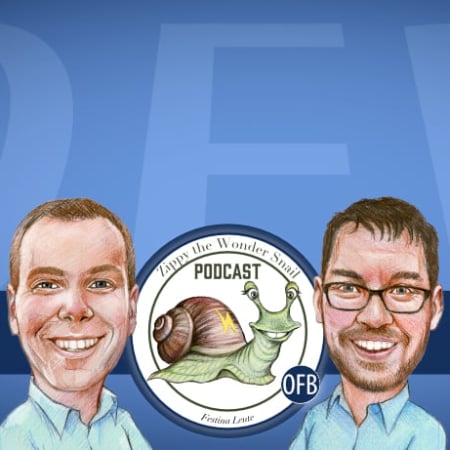
Episode 49: We Report, Jason Cries
The Boys are back — one standing, one sitting — both trying to make sense of Cardinals chaos, Blues heartbreak and the first hundred days of Trump 2.0. Plus: speculation on the next album from Taylor Swift and a meditation on the mystery of Jesus’ two natures.
Sometimes the Little Things Are Big
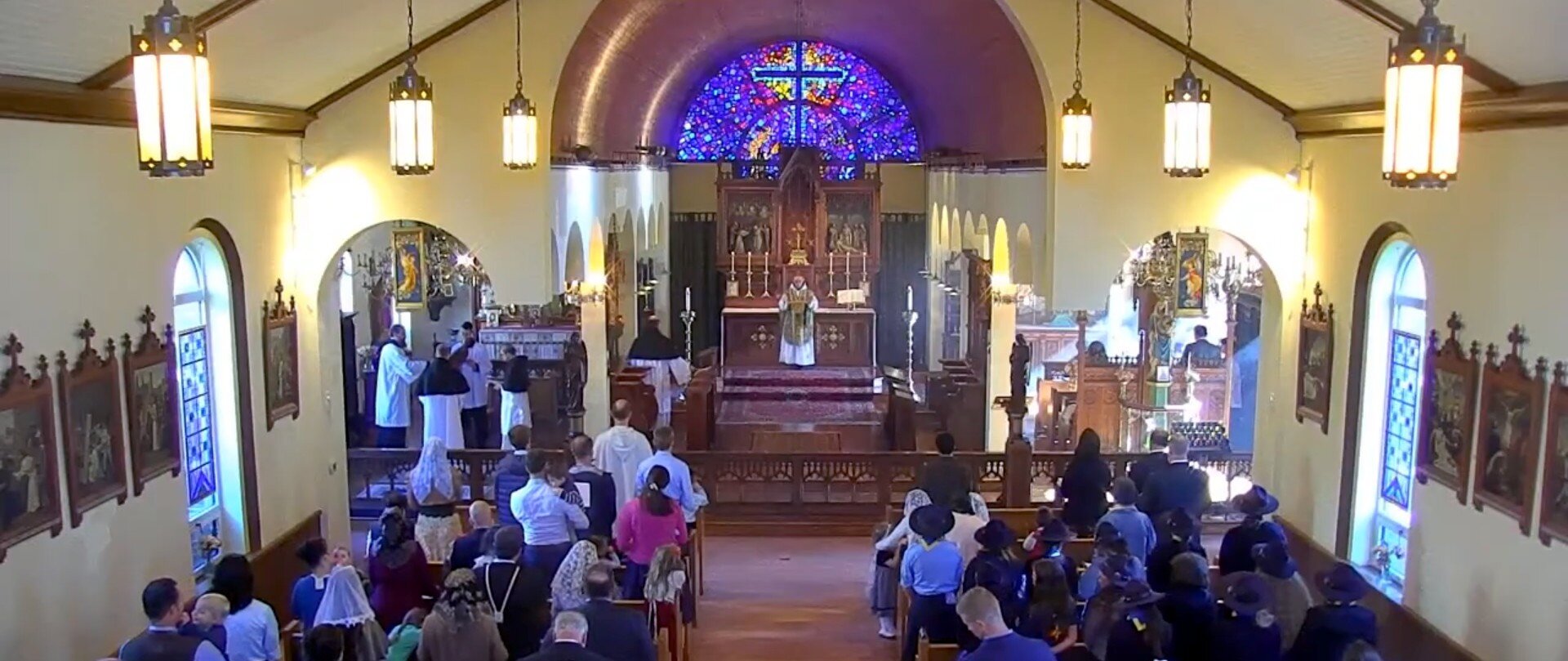
One would never have guessed the power of just zooming the camera back.
In late spring, as I’ve written, our beloved local priest, Father Mark, died of esophageal cancer at age 49. The grief-stricken congregation was oddly denied admission to the parish church for his funeral. The church ended up being half empty; the service was to be streamed for those who cared to watch.
Ecclesiology, Doctrine, Ecumenism: A Few Difficult Questions
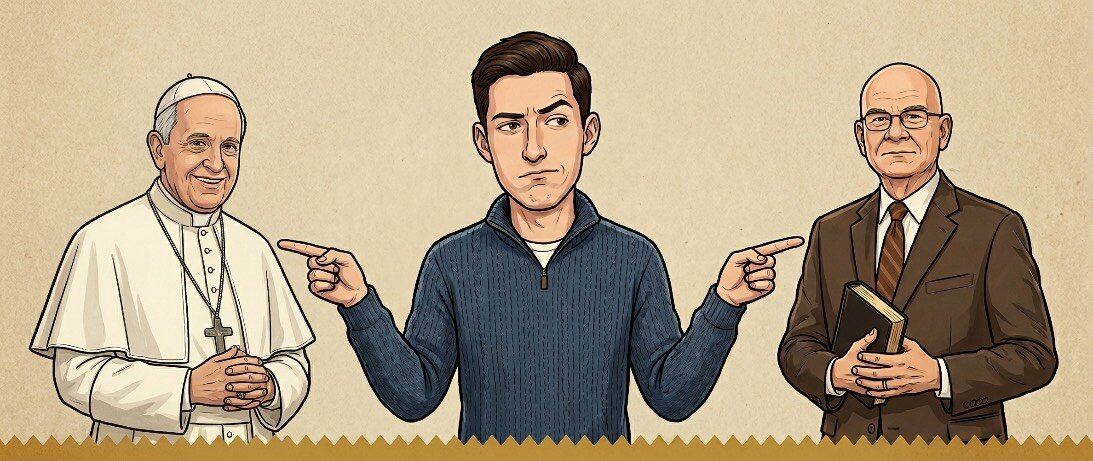
I am provoked by an internet presence that goes by “Redeemed Zoomer,” presumably a 20-something young man holding theologically conservative views, and similar views on Christian ethics, who is Reformed.
Oremus
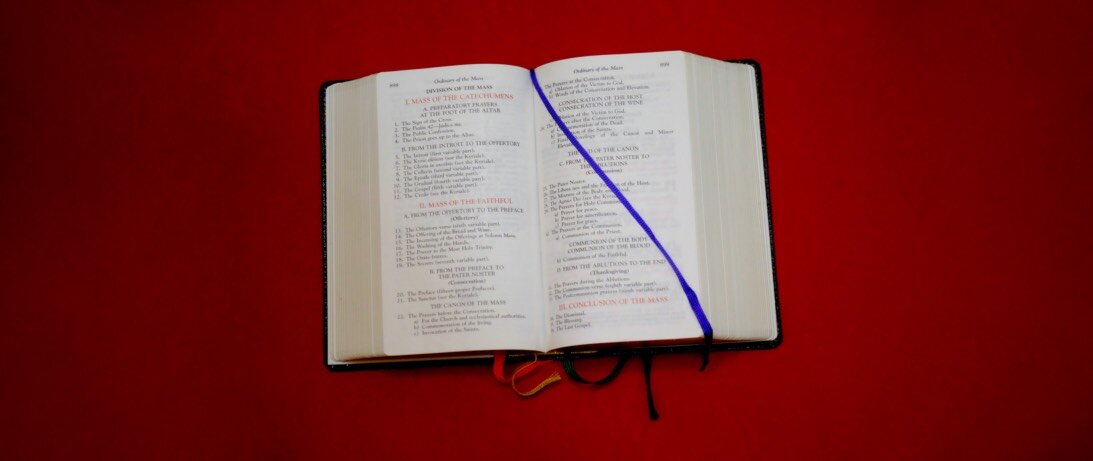
When one of my sisters phoned the other day, we got to talking about the church in which we grew up.
We were raised high-church Episcopalian. When you went to church there was no other place it could possibly be and nothing but worship could have possibly been going on. As the priest consecrated the body and blood for communion, he — yes, he — faced the altar and crucifix. We received communion on the tongue while we knelt at the communion rail. The lay readers — those who read the Epistle at each service — were enrobed, as were we acolytes.
 Harvester Christian
 FaithTree Christian Fellowship
 Little Hills Church
 Bible Baptist Church
 True Life Community Church