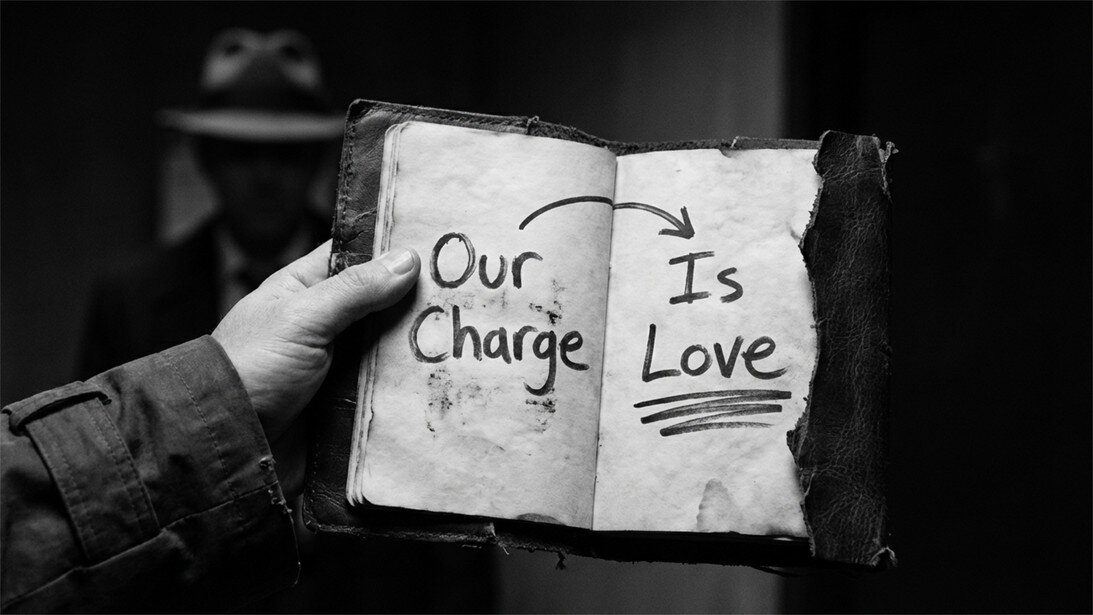
Easter is God’s profound statement that He not only listens, but He also saves.
The following study questions are AI generated and may contain errors.
The pastor uses the parachuting pilot story to illustrate the difference between human reassurance and God’s rescue. How does understanding that God “took the hit” and “paid the price” change the way we respond to His promises during difficult circumstances?
The sermon emphasizes that God not only hears our cries but actively acts. Can you think of examples from your own life or from Scripture—such as the Exodus deliverance—where God’s action went beyond mere acknowledgment to bring about actual change?
The pastor discusses the tension between seeing God work very clearly at times and other seasons when we wait without clear evidence of His presence. How do we cultivate trust in God’s faithfulness during those in-between seasons, and what practical steps can believers take to remain steadfast when, as David notes in verse 8, wickedness still seems to prevail around us?
Reflecting on the moldy envelope and the “tracking number” metaphor for the Resurrection—how does knowing that Jesus rose from the dead serve as evidence that God will ultimately fulfill His other promises, even when we are still waiting? In what ways does this change how we respond to delays or unanswered prayers?
How does the story of the koi fish nudging his dying companion illustrate both the sincerity and the limits of human effort? And how does the Resurrection answer what little Puddles could not—demonstrating that God is not merely sincere but actually capable of conquering sin and death?
This transcript has been automatically generated and may contain errors.
Hello, and happy Easter Monday. I am so glad to be with you as we continue our series in Psalm 12 on Steadfast. Great to be with you tonight because we are together as those who celebrate the risen Lord. Yesterday was Easter, and we sang praises and looked at God’s word and reflected on the fact that the Savior of the world, He is not dead, He is alive, He is risen. What an amazing thing. And it’s all about how God rescues us.
Last week on Steadfast, we saw a video that came out about a month ago, towards the very beginning of the war in Iran. If you think back to that video, or if you weren’t with us last week, just briefly, it was a video of a pilot who had to parachute out of her plane because the plane had been damaged, and she parachuted down to the desert in Kuwait. There was a man rushing towards her, assuring her that she was okay, that she was safe, wanting to know if she needed anything. It was a beautiful video. I had tucked it away because I wanted to share it with you, because it’s just one of those wonderful human moments.
But I already alluded to a problem in it last week. If you think about that video, I mentioned then that the man could assure that everything was okay; certainly, he was going to do what he could to help her. But if she’d been severely injured, could he have really helped her? Even if he were an amazing surgeon, he might not have been able to save her. And then there were all the other things that might have been running through her head, like, are they going to blame me for the destruction of this expensive aircraft? Of course, it seems to have been a friendly fire incident. It wasn’t her fault. But she might have wondered, does this affect my career? I survived, but what are the long-term implications? How does this all play out? And he couldn’t assure her of that.
A lot of times when people try to rescue us, and maybe even do from a particular situation, they say, “It’s okay, don’t worry.” We think, well, it’s nice that you’re saying that, but we don’t really want them to say it’s okay, because we realize the ten other things that are coming that make it not okay. So what happens when God says, “It’s okay, it’s okay, you’re safe”? He’s just rescuing us. Rescue is really nice. We think, do you really understand everything else that’s coming at me, God? But what we celebrate on Easter, what we celebrate that God totally understands, because He’s crashed for us. It’s not just that He’s assuring us it’s okay. He’s actually the one that took the hit. He took the punishment. He took it for us. And because of that, as we go through the psalm, we find that we, as God’s people, we can cry because we serve a God who answers and understands. And let’s pray tonight that we can better understand that. Will you pray with me, please?
Father, thank you for this evening. Thank you for your Word, and thank you for the truth that we find in your Word, that it is a true and living story, that we serve a true and living God who came into this world, who rescued us. It doesn’t just rescue us and say it’s okay, but we know it actually is okay, because our God is with us every step of the way and has paid the price for us. Lord, help us to understand that tonight. We pray in Jesus’ precious name. Amen.
Let’s go ahead and turn to the first part of verse 5 tonight. Here’s what David writes: “Because of the violence done to the oppressed, because of the painful cries of the needy.” We’re just going to pause on that part for a moment.
The real crux of the question is, okay, there’s a problem, right? That man rushing towards the pilot who had parachuted out, he knew there was a problem, she knew there was a problem. He wanted to help as he could, and clearly he did. We get to know that she survived, right, and made it back safely. What about all those questions? How is it going to play out? What are the long-term implications? Well, he couldn’t assure her of that. What happens when God’s people cry out? There’s all these things happening, and God can say, “I love you, I care about you, I hear you,” but how does it play out?
Well, the first interesting thing I think that we discover here in verse 5, if you’re going through the Psalms in order, as we’ve been doing here on Steadfast, every so often we go into the next Psalm. This is the first Psalm, this is the first quote here, right here in verse 5: “because the poor are plundered, because the needy groan,” it’s being said by the Lord. In your Bible, it’s likely put in quotes. This is the first time God gives a quote in the Psalms. This is Him answering. So, of course, He’s spoken elsewhere in the Bible, but as we’re going through this collection of songs praising God and speaking to His people, this is the first time that we see a quote. Here’s what God’s saying, or sometimes called an oracle. So, here’s a message from God in His words. What does He say, though?
Well, He acknowledges the problem, but He says something else. “I will now arise, says the Lord.” “I will now arise,” says the Lord. Not just acknowledging it. He’s not just racing towards us saying, “It’s okay, it’s okay, you’re safe.” He’s saying, “Now I’m going to do something about it. Now I will arise.” Now, that phrase had a meaning in David’s time, but I think as we think about it, it certainly has a little bit more meaning for us. He will arise. Did God come into this world and arise to action for us? Oh, yes, He did. Very much so. He came into the world, He lived, He suffered, He died, He rose from the grave, and He sent out His people with the Spirit of God in them to go do His work. God arose mightily.
David’s looking at the coming promise. God’s people, well, we can look back and see that promise over time, that He hears His people and He acts. And that’s something that He’s been conveying over and over again throughout scripture. If you’re going in order, you see that’s the continued message. He doesn’t just hear, He acts. For example, back in Exodus chapter 2, verse 24, God heard their groaning. God remembered His covenant with Abraham, with Isaac, and with Jacob. God hears. He’s listening. And then what does He do when He hears that groaning in Exodus?
Well, He doesn’t say, “It’s okay, people, it’s okay, I’ll pat you on the head and tell you that I care about you.” No. What does He do? He rescues them. He brings them out of Egypt, and He establishes them as His people to go on a mission of salvation that will ultimately lead to the coming of the very Messiah, the very one who went to the cross for us, the very one who rose from the grave. So when we say He has risen, and we remember what He has done, we can remember all those times God said, “I hear and I’m going to do,” and we’re proclaiming something God didn’t just hear, but He did. He’s the one who does. And He hasn’t wandered away. He didn’t get bored somewhere in Exodus, or…
You can probably all, if you’ve tried Bible reading plans, and you’ve tried to go straight through the Bible, probably all at some point have wandered away in the middle of Leviticus. There’s a lot of rich promises in that book, but it’s hard for us to get through. We wander away. God didn’t wander away in Leviticus. He didn’t wander away in the Psalms. He didn’t wander away in the Prophets or in the New Testament. He didn’t wander away in the time after the Scriptures close. God continues to hear, and He’s the God who does.
It doesn’t always happen immediately. We’re not always parachuting out of the plane, and we land on the ground, and there’s someone immediately racing forward to thank us for what we’ve done and to assure us that it’s okay. It’s really nice when it happens, right? We go and do the work God’s called us to do, and someone thanks us for doing it, or someone helps us out in a jam because of it. It’s really nice when that happens. But just to give us a preview of where we’re going next week, when we look at verse 8, David doesn’t say, “It’s all been solved now.” He says, “On every side the wicked prowl, as vileness is exalted among the children of man.” He doesn’t say it’s all gone. It’s all here. We feel that. But God says, even as you feel that, I’m here with you. I haven’t forgotten you. And I’ve shown you enough that you can be assured of that.
If you think about, we talked about flower bulbs last week. You plant a bunch and you wonder if any of them are good, you feel a little better when a few sprout up. Plant some tomato plants. You feel better when a few start to ripen, and you get some vegetables. We feel good when we see those first fruits, and that’s exactly what we see on Easter. Take a look at 1 Corinthians 15:20.
“But now Christ has been raised from the dead, the firstfruits of those who have fallen asleep. For since death came through a man, the resurrection of the dead also came through a man. For just as in Adam all die, so also in Christ all will be made alive. But each in his own order, Christ the firstfruits, then when Christ comes, those who belong to him.”
Jesus is the firstfruits, and He is here right now, and He’s taking us and not just patting us on the head, but what’s He doing as He pats us on the head? He’s saying, “I’m actually here, and I’m patting you on the head so you notice that I’m here. I’m not just trying to make you feel like you’re distracted or comforted a little bit. I’m actually here to rescue you.”
When we see that the risen Lord has risen, He says, “Let me show you this. I’m not just assuring you. I’m going to show you what I do, how powerful I am, and therefore how you can hold on to me even when it feels like, is it really working?” Because we do feel that tension, right? The disciples felt that tension. Jesus is with them again for a little while, then He ascends into heaven, and the question is, now what? He’s been here, but now He’s departed. Now what? Is He really here? Is He really going to be there for us? Where do they look? They need to keep looking to Him.
And sometimes we see God in very clear, very bold, very present ways, and we have no doubt He’s there in the moment. But sometimes we’re going to be in that, even that post-ascension moment where, wow, that was really neat, but now there’s the rest of life, and what are we supposed to do with it? Our God’s promise is going to keep coming. About a month ago, I opened the church mailbox and retrieved the mail, and we’d received a donation. And I looked at this donation, and this envelope had been through the mill. And it was clear, like there was mold growing on it. It had been through a lot. And so I looked at the stamp on it, and the postmark, and found out that the letter had actually been sent four months prior. I had no idea where it had been for the last four months. I guess it went on a world tour. And it finally made it. Raggedy, and it made it to the church. Worse for wear, but good enough. It made it.
But it made me think of all the times that we mail things and they don’t make it. Because sometimes something like that happens, and sometimes it arrives in time, sometimes it doesn’t. Sometimes you get something, and it would have been nice, but it came too late. And then other times we just keep waiting, and it never arrives at all. It goes on the world tour and stops off in New Zealand and never comes. So many things in life are like that. Not just the mail. We like to make fun of the mail, but it’s true of so many different parts of life. And I think a lot of times we wonder, well, I see God working in other people’s lives, and sometimes they have to wait a while, so maybe they’re the moldy envelopes. They did get the envelope finally, but it took a while, but it came. But I also know some of the mail never arrives at all. Am I going to be the mail that never arrives at all? Are God’s promises that He sent me never going to arrive? And because of the way life goes, it’s not an unreasonable question to ask, is it going to ever arrive? Can I trust God’s faithfulness while I wait?
Because a lot of things, they are 50-50. Or 20-80. Might happen. Maybe. I wish it would happen. And we just don’t know, and we’re not even trying to be cynical. It’s just the way it is. And so we say, well, but what about here? God says, well, let me show you my track record. Because my track record, I never lose the mail. Sometimes it might not come when you want it, but you know what? It always comes while it’s still relevant. It might not come in the way you think it should, but it does come, because God answers. We can trust in his salvation.
Why? Because God actually answers. He actively answers. And that’s what we see very clearly on Easter. That God promised He’d send a Savior, and what did He do? Well, He sent the Savior. We were told the Savior was going to take on the sins of the world, and what did the Savior do? He took on the sins of the world. It actually happens.
Move on to the latter half of verse 5:
“Because of the violence done to the oppressed, because of the painful cries of the needy, I will spring into action, says the Lord. I will provide the safety they so desperately desire.”
I won’t just spring into action and try. I know God is going to provide safety. Everyone who trusts in the Lord will ultimately be in His safety. It doesn’t mean we’re not going to get a little mold on us first. We’re not going to have some wrinkles and water stains on us. But He’s going to provide safety. God may wait, and we might say, “God, why are you taking so long? Are you going to be like the mail where the check comes but it’s past the date that it can be cashed? I look down and say, oh, there were promises of God, but I can’t use these anymore.” Is that what’s going to happen? Is it because He can’t even get it safely through the mail? No. God’s not waiting for any of those reasons. He’s waiting out patience, not out of apathy or mishap.
Take a look, for example, 1 Peter chapter 3. Peter’s reflecting on what Jesus has done for us. He says,
“In it He went and preached to the spirits in prison, after they were disobeying it long ago, when Noah patiently waited in the days of Noah as an ark was being constructed. In the ark a few, that is eight souls, were delivered through the water. And this prefigured baptism which now saves you, not the washing off of physical dirt, but the pledge of good conscience to God through the resurrection of Jesus Christ, who went into heaven and is at the right hand of God, with angels and authorities and powers subject to Him.”
Peter, who obviously had to wait, he’d experienced that probably what felt like a lifetime of wait in between the time that Jesus died and He was resurrected, and then had gone through the rest of his life standing up, doing the things that Jesus had called him to do, but it being difficult. And he says, when we’re waiting, we know what He’s done. When we’re waiting, it’s like how God waited to bring the rains for Noah’s ark. He waited and did His work first. Right now He’s waiting. We don’t fully understand His purposes. Whom is the plans to save that maybe hasn’t even been born yet? What His overall arching plan is?
But we know this: that when God’s waiting, He’s waiting for good purpose, and He’s still going to remember His people. He doesn’t forget them just because He’s waiting. And He actually can do what He says. Those firstfruits have come. It’s not like everything we experience, even the beautiful but too weak things that we see.
I remember years ago, my dad dug out a hole in the ground next to the sidewalk and put in a pond, and we went as a family and picked out fish, and we got some different colored goldfish and put them in the pond and one koi. And why it’s important that we got one koi and the other were just goldfish becomes obvious in a moment because, you see, we put mulch around the pond. It looked really pretty, but it turned out there was something toxic in that mulch, and it started to wash into the water. And these beautiful goldfish we’d gotten, and some that we already had that we had in a little pot that had been sealed off that could function sort of as a little water garden, that we put into the pond, all these goldfish, both new and old, big and small, they started to die. And we didn’t know why at the time.
And the bigger ones seemed to hold on for longer. There was this very large goldfish, beautiful goldfish in there, and he held on for a while. And the little koi, who was new, he liked to follow the big goldfish around. He’d follow him, and then the big goldfish started to suffer the effects of what ultimately turned out to be that toxin coming from the mulch, and he started to list on his side like fish do. And I’ll never forget watching that itty-bitty little koi, and he would nudge his big friend, just trying to get him to be upright again. You could see him trying to push him back into position and help him to move.
I thought about the beauty of that on the one hand, this little koi, we named him Puddles, who lived for many years after that. He tried so hard, and he wanted to help his friend, this older fish that presumably, however fish do, had taught him things, right? He cared. The care was absolutely clear there. If you saw it, you would know it was there.
But what couldn’t a little koi do? And what, likewise, are we often unable to do? We might be able to encourage people, we might be able to wish we could do things for people, we might try to nudge them along, but as the toxins of sin, of death, come in, there’s nothing we can do. Little Puddles couldn’t save his big friend. He tried. There was something beautiful, but he couldn’t do it.
Here’s what we need to know. That’s not the way it is with Jesus. He’s not just nudging us along, saying, “Let’s see if I can keep you from death, let’s see if we can do this.” No, the Resurrection says God actually has power over life and death. He is not defeated, He never will be. The Resurrection was a note to us that God isn’t just talk, and He isn’t even sincere action that’s incapable of bringing something about. No, God is the one who actually can do it.
I mentioned that envelope that came earlier. And something that’s often comforting when someone mails us something is if they have a tracking number on it, right? If we know we’re expecting something, and we can track it, we can see where it’s coming and how it’s progressing, and even if it gets delayed, we can tell, “Oh no, it hasn’t been lost, it’s still making its way from sorting center to sorting center, it’s getting closer, I know it’s coming.”
And we say, well, what’s that have to do with God? Well, the Resurrection is God’s tracking number. He says, “I’ve been promising I’m going to save my people, and I’m actually going to show you proof that I save my people.” When we say, “God, is the Resurrection coming? Is the end of evil coming?” He says, “Look at the tracking number. You can see that on Easter Day, there it arrived. It’s not all the way there yet, but you can see with confidence it actually is coming. It hasn’t been lost. It’s en route.”
David here, as he speaks these words, he speaks with confidence. It isn’t there yet, but he’s seen enough of God that he knows he has the tracking number. It is coming. That God understands as He answers, that God actually can do what He says that He saves.
When we think of that beautiful tracking number of life that Jesus gives us on Easter, what is He saying to us? Salvation’s on the way. You can look at me because I’m the delivery, and I’m on the way, and you can trust that because I am risen.
Will you pray with me, please? Father, thank you for this evening and for your word. Thank you for the tracking number we see throughout Scripture, that you are faithful. That through all time, whether it was back in the time before the Exodus, or in David’s time, or in the disciples’ time, or in the last 2,000 years, over and over, you’ve shown your faithfulness. And even when we aren’t sure that this next problem is going to be solved, you say, “Look at the tracking number. I am triumphant over death, and all who trust in me will experience that triumph. And we see the firstfruits there to know that it’s true.” Would you assure us in that tonight? We pray in Jesus’ precious name. Amen.
I hope this has been an encouragement to you today. And if there’s any way I can be praying for you, any way I can encourage you, please just text in at 833-356-4032, or those comments right below. You can tap on the box, type in a comment, ask a question, leave a prayer request. We love to pray with you. I love getting to hear from you, so please do take advantage of that.
Also, if this has been an encouragement to you, you can always share this, and in fact, I would ask you, please do. We need to tell people, “Hey, the God who is faithful on Easter Sunday is also faithful on Easter Monday, and Tuesday, and Wednesday, and Thursday, and Friday, and Saturday, and the next Sunday, and the next Sunday, and the next, and the next, and the next, and always.” And when we share a bit of God’s faithfulness through the study that we do together, it really does make a difference. So please do hit that share button. I’m so thankful when you do.
If you’re looking to get to know more about that tracking number that’s written throughout scripture and you’re not in a Bible study, please consider joining us on Tuesday nights at 7:15 p.m. Central Time. Actually, if you’re in a Bible study but you’re free on Tuesday nights, join us anyway. It’d be great to have you. We’re going through the Bible. We’re going carefully and slowly through it because every single page has the tracking number written on it. And we get to see that. So I hope you’ll join us. It’s fully interactive.
We live stream on Monday nights, where it’s just, you know, what you’re seeing right now. I’m on screen, and then our church family’s interacting in the chat. But Tuesday nights, we use Microsoft Teams. You might be familiar with Zoom. Very similar to that. So it’s fully interactive. You can come on screen, and you can interact live in audio and video. If you want help, again, jump in the comments. It’d be great to do that.
Great thing to do after Easter. And of course, join us on Sunday. We’re beginning a brand new series, Reflecting on the Light of Easter. It’d be great to see you, 5:30 p.m. Central Time for that. Hope you have a wonderful and blessed week. And just once again, He is risen. That’s a good reason to have a blessed week. I’ll see you again very soon.
Start the Conversation