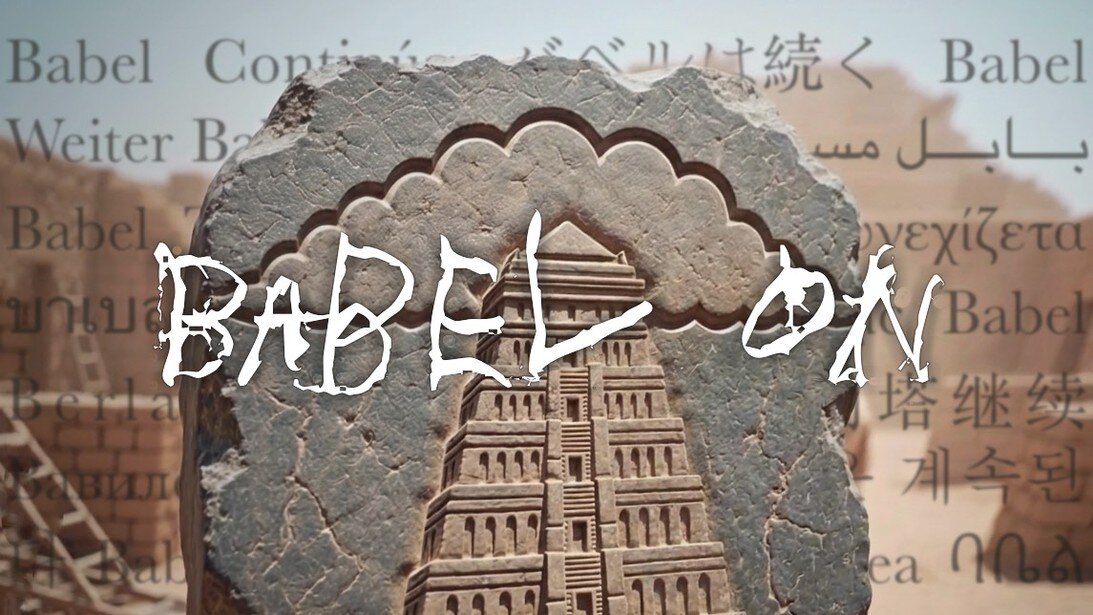
We all want our lives to mean something—to make a name for ourselves that people will actually remember. The builders at Babel in Genesis 11 wanted exactly that, and the choice they made raises an uncomfortable question for anyone who’s ever chased significance: is the tower you’re building any different from theirs?
The following study questions are AI generated and may contain errors.
This transcript has been automatically generated and may contain errors.
The Road Not Taken.
We spend a lot of time thinking about which roads we take and which roads we don’t. I think that’s why, even if you aren’t particularly into poetry, you probably know that poem. The road chosen is the road that makes all the difference. I think part of the reason it appeals to us, even if we aren’t those who love poetry, is we like to think our choices matter, don’t we? And we like to think that we can make all the difference simply by making the right choice. A choice that will make our lives more important, and we can reflect back on it and say, see, I did this, and it made all the difference.
Hi, welcome to Steadfast. I am so glad that you are here tonight. The blessing to get to be with you. And while we’re together, would you go ahead and hit that like and that share button so that those who haven’t yet taken this road might go ahead and join us tonight. As we wrap up our series on the Tower of Babel, it’s a perfect time to think about what choices we do make. Because we do. We love to think our choices are important.
And that’s why I think it’s sometimes a shock to people to look at that poem and realize that Frost was actually mocking the point. When he wrote the poem The Road Not Taken, it was a poem written in jest for a friend, Edward Thomas, another poet, a poet who had written a poem entitled Roads. And the two of them had gone on various walks over the years, and as they had gone on walks together talking, they would try to decide whether they were going to take this road or that road. And here was the thing that happened. Thomas, no matter which road they took, would spend a significant part of the rest of their walk wondering if they could have seen something better, if the day could have been better and more interesting if only they had taken the other road.
It was sort of a negative way to make the point, but Thomas assumed that his choice did make all the difference, he just made the wrong choice. And so Frost, to poke fun at his friend, wrote this poem and sent it to him. But his friend, just like most people who read it, even today, misread it and thought it was glorifying the individualistic choice. Even though the poem itself, if you look, is actually undermining that throughout.
Throughout, it’s noted that, I guess you could say this about the path I took, or, you know, basically the two paths were, they were pretty much about the same, I just happened to pick one. Throughout the entirety of it, until the very end, the emphasis is on, if you really look closely, you’d have a hard time telling the two roads apart. It isn’t that one is overly commercialized and asphalt over paradise, and the other one is a beautiful nature path. The point is, if you come a couple hours before, maybe there have been a few people that trampled the leaves a tad bit more on the one than the other, but for all intents and purposes, same road.
But someday, and this is where that mocking turning point happens at the end, Frost says, someday I’ll look back and say, that choice made all the difference. And that’s the part, even though we see in the context of the poem that it’s silly, that we latch onto. Same thing that the people that decided to build the Tower of Babel were latching onto. We can make a choice, and when we make that choice, we’ll latch onto it, and for generations people will point back and say, that choice, it made all the difference. Just look at that choice. Because it makes us feel important.
Now, if we look at that poem and take it too far, as some people have when they actually do understand Frost’s meaning, the point can be, well, our choices make no difference at all. I don’t really think that’s Frost’s point, either. It’s about better understanding our choices, and maybe we can do the same with the Tower of Babel. Because as we’ll see tonight, there are people that chose not to build it that still made the same wrong choice.
But as we look at the end of this story, and what happens immediately after it, God is saying it’s a little bit more nuanced than that. You see, our problem is, on the one hand, we want to think our choices are far more important and consequential and able to accomplish our goals than they ever are. And on the other hand, if we say, well, okay, that can’t be the case, we want to believe, well, then maybe our choices aren’t really that profound at all. We’re going to be put in that tension tonight, that we do have a choice on what we’re going to do. And in some sense, it really does make all the difference. It’s just not the choice we think we’ll make. Let’s pray that God would help us to understand that tonight.
Would you pray with me, please? Father, thank you for your word. Thank you for your grace that you give us, that you give it to us, even in giving us these stories of people making bad choices. Lord, would you help us to see the real point, the point of what really matters to do? Would you help us to do just that this day and every day? We ask in Jesus’ precious name. Amen.
Let’s go ahead and take a look at verse 4 one more time. That’s where we started, actually. We looked at that a couple of weeks ago. They said, Then they said, Come, let us build ourselves a city, and a tower with its top in the heavens, and let us make a name for ourselves, lest we be dispersed over the face of the whole earth.
They’re making very much of a choice here, and that’s one of the choices we can still make today. What we might call the tower choice. The choice to try to bless ourselves, to make ourselves great. I think we’re given the words that inspired their plan, because it’s not something that happened just then. It happens, well, it happens every day when we wake up, because our inclination, whether we say it explicitly or not, is we would like our names to be great. And sometimes that even seems like the opposite of what we say, because we say, well, I’m not really that important. I have not that much to contribute. But in a sense, we’re still arguing, well, I’m so great, I can even determine I’m not going to be great.
We’re always looking for ways to say our choices are the ones that matter. And the people who built the tower there, they thought their choices were so profound, they could make it so no one would ever forget their names, that their names would truly be great. Maybe in a sense we could even argue they succeeded, right? We’re still talking about the people who built the Tower of Babel millennia later.
Now, we don’t know most of their individual names. But at least they’re remembered, and maybe we’d say, well, that’d be good enough. Okay, you don’t know my name, but you know who I was, that I was a part of this thing. That sounds like a bit of progress. But it’s more complicated than that. There’s certainly an irony here, though, that these are descendants of Shem. And so the whole claim that they make here is a play on his name, his name, name. They want to make a name, a Shem, for themselves. They want to be important.
If you recall, we do have a genealogy right before this that describes the people leading up to this. And it gives us a sense of names that we still remember today, because they were part of the history of humanity in general, including some of the people, presumably, that made that very claim. So we could say, yeah, they succeeded. We know Shem, of course. We know Eber. We know then Peleg and Joktan, his sons.
And the first week, we observe that, on the one hand, Peleg comes back up because we’re going to get to Abraham in a moment, and Abraham’s a descendant of Peleg. But Joktan is part of the other nations, and quite possibly he and his family could have been involved in the building of the Tower of Babel. At the very least, though, the clear distinction is they’re not part of Abraham and his line. So you have a division here. We say, ah, there’s the important difference.
Now we can see where humans make the choice, the right choice and the wrong choice, right? Peleg, oh, isn’t it great? He and his family followed the Lord. Joktan and his family, they were those blaspheming, pagan, horrible people that built towers and stuff. It seems sort of safe that way, right? We can say, I can make a choice, make the right choice, one way or another. Maybe that choice is, I’m going to make my name great by building a tower, or maybe it’s going to be the profound way that I and my family lead in a different direction from those horrible people. Either way, I’m important. I can make a name for myself.
We want to believe that there is one road, the road less taken, that we can take. And someday, when we reflect back on it, as Frost said, we’ll let out with a sigh, that has made all the difference. Problem is, it’s not really quite that simple. For example, we know from the later information we get about Abraham’s family, it wasn’t that Abraham’s side of the family, going all the way back to Peleg, was just so much more devout than Joktan’s side. Take a look, for example, at Joshua chapter 24, verse 2.
And Joshua said to all the people, Thus says the Lord, the God of Israel, long ago your fathers lived beyond the Euphrates, Terah the father of Abraham, and of Nahor, and they served other gods. Hmm. Doesn’t exactly sound like we have the more devout side of the family here, does it?
And see, as we put these pieces together, we find this story is undermining all the different places where we’re looking for that road less travel we can take. The people that assembled the teams of engineers and brick builders and planners and the person that gave the land for the tower, they all thought they were taking the road less travel, the one that would make their name great, the one that could overcome everything that might be thrown at them by building a tower, and, well, it didn’t work. God dispersed them.
So we say, ah, but look at the other side of the family, which we find they’re wandering to and fro as well. What do we find with Terah? He sort of aimlessly wanders towards the promised land, not because he seems to understand the call of God, but rather what? He’s going from place where we know from ancient records, from place to place where they worship the moon. And it would seem that maybe he was looking for a better place for his family, a nicer house, more income, but trying to stick to the familiar that wasn’t the Lord. Maybe he thought he could get closer to the moon god or goddess, and somehow that would make him better off.
We want to believe somehow our choices make all the difference, and that’s why I believe that we keep misreading Frost’s poem. Because whether it’s tower building or where we’re traveling to or whatever else, we want to be able to say at some point in our lives, ah, that made all the difference what I did. I made a name for myself. I did something great. I am important.
So we go to and fro like Terah, going from city to city, trying to figure out how to make our name great. When actually the different roads we’re trampling and other people are trampling, you know what? They’re almost indistinguishable. We can’t really tell all that much difference. And it doesn’t really change the inevitable.
It’s interesting. Frost sent that poem to his friend Thomas in 1960. They were corresponding back and forth from America to Ireland, and Thomas himself had written a poem about roads, one that Frost surely had in mind as he wrote his poem, that talked about the travels we have on roads, and he reflected on his beloved land and the Roman roads that had been built there that were still in use, that are still in use today. Some of which are very busy, some of which aren’t. Some of which we’re taking on serious travel, some which weren’t. All the different little frivolous trips that we take that we turn into grand things but really aren’t that important and we can’t ever remember later on.
He uses all this exalted language to play up roads, but most of it just doesn’t really matter all that much. How many times do we forget something at the store, forget to bring something to church? We turn around, get it, go back. All those trips that aren’t really all that profound. And that’s the picture that we get from Thomas’s description of roads, grandeur that really, if we think about it for a moment, isn’t all that grand until we get towards the end of his poem. He writes these words:
Now all the roads lead to France, and heavy is the tread of the living, but the dead returning lightly dance. You see, he thought about all these roads he’d gone over since his childhood, all the roads he’d go over even that week, maybe roads that he’d walk down with his friend Robert Frost at some point discussing poetry or the world. And he saw something different happening on those roads. In the middle of World War I, he saw all the troops being deployed, going over those roads, going over to France, and going over to die. And in fact, Thomas himself, a few months after his correspondence with Frost over The Road Not Taken, would take that road. He’d find himself in France, and just a few weeks beyond that, he too would be amongst the dead who had trod heavily to France, and would not return to enjoy his roots.
Think about those choices that he contemplated. Should I have gone on this road? Should I have gone on that road? They still all led to France. They still all led to death.
The road to build a tower, what happened to those people that built the tower? We can’t go and find some place in the world and sit down and talk about the good old days when they were tower building today, because you know what? The road led to death. Terra, who for whatever reasons fully possessed him to do it, bouncing to and fro, taking his family along with him on his journey to find that place he ought to be to presumably make his name great, he’s dead. It doesn’t matter. It leads to death.
Now, many people during World War I, and many people throughout history, if you look at a situation like that, you say, well, all these things we thought were grand, all these things that we thought were important, you know what? They don’t really matter, and if they don’t really matter, maybe nothing matters. Maybe the point of Frost’s poem is none of our choices matter at all. Maybe the point, even if we think about the story of the Tower of Babel, is you know what? Nothing really matters at all, because we could be a tower builder, die, and do bad things on the way. We could be a non-tower builder, and we could die and have done bad things on the way. It all ends the same way.
Except God says, is that really the case? No. And it’s so crucial that we understand that the Tower of Babel leads directly into the story of Abraham, so here he comes up again. Because that story of people who favored the tower way isn’t the only way, and a lot of the things that we think are those profound choices we are making that turn out not to be all that different, well, the problem is we’ve still been making the same choice to build a tower for ourselves. We just choose a different tower, one that somehow we think is less selfish or a bit more humble. You know, we don’t build a giant tower, we just build a little tower, something that people remember us by without us looking too self-important.
But there is truth to the idea that there is a path that makes all the difference. There really is one; it’s just not the one that we usually contemplate as one of the options on the fork in the road. Take a look at Genesis chapter 12, verse 1. It says, Now the Lord said to Abram, Go out from your country, your relatives and your father’s household, to the land that I will show you. Then I will make you into a great nation, and I will bless you, and I will make your name great, so that you will exemplify the divine blessing. I will bless those who bless you, but the one who treats you lightly I must curse, and all the families of the earth will bless one another, how? By your name.
You see, we can choose the tower, but we can also choose to follow. And that’s the different path. We can choose to follow and be blessed by being a blessing. It’s a very different path. All the people we see back in the story of the Tower of Babel and what’s happening in early human history, they’re trying to make themselves grand, to make a name for themselves, to leave their mark in the world that’s showing how they were important. And we want that, right? We want to know we have meaning.
What do we find profoundly different here? God calls Abraham. He says, Abraham, you’re going to do this. And Abraham does what? He follows. And he follows a promise of what? That his name will be a blessing to people. Not, how can I make my name great, but how can I be a blessing? And not, how can I make it about me, but how can I follow the Lord? A crucial, crucial difference.
The other people, they were seeking to make their name great, and you know what? They fail. And even if it looked like they were doing it for a while, then they fade away. If you go back just a few verses before we encounter Abraham, in Genesis 11, verse 16, it says, When Eber lived thirty-four years, he became the father of Peleg. After the tower, after the division here that’s starting to lead towards Abraham and the nations here, choosing not to follow the Lord, after we see that division happening, Joktan just, well, he falls off the map, so to speak. It’s not even worth mentioning as that genealogy from Shem to Abraham then is developed. It’s inconsequential that there was this other brother. This other brother chose to be with the nations. And Peleg did too, but God had a plan here. And that’s what adds the meaning. Not that Peleg was great. Not that Terah was great. Not even that Abraham was great, but rather God’s great and God’s merciful. God chose Abraham as an instrument of his blessing.
And so of all those people seeking to make their name great, they failed. But in Abraham, we see someone whose name actually was made great. Terah stops. He doesn’t get to the Promised Land because he’s chasing after whatever he thinks is somehow going to make his life great in these different cities he stops in. It takes Abraham to go a step further. Abraham to say, it isn’t enough just to travel, whether we’re escaping war or looking for a better opportunity or trying to find a better set of temples to worship some God that we think might somehow help us. It doesn’t matter those things. God’s called me, and I’m following God.
And does Abraham arrive at the Promised Land? Yes, but the important part isn’t that he arrives in the Promised Land. But rather he’s following God who brings him into the Promised Land. That’s what makes all the difference.
And with that, what happens? Well, the one who isn’t building a tower but is following, he actually gets the name that the others wanted, the name that we remember, the name that even today, so you think about our world, Abraham still looms large. Just think about the peace process in the Middle East and the fraught nature of it, the wars and ceasefires and everything else that happens, and they talk about this whole process of the Abraham Accords, this idea of getting the different peoples of the Middle East to work together because of their common ancestor, Abraham. Abraham’s name seems great, but we say, well, how great is that? They still fight each other. It doesn’t seem to actually bring peace. There’s all kinds of war over there. Well, it’s because we’re still looking at the wrong thing. We’re looking at, can we have earthly success?
Abraham’s success wasn’t in that he brought peace in his time. It wasn’t in the fact that he actually got to go to the Promised Land. It wasn’t even in the fact that he, long after his death, would be remembered, and that even today we’d remember his name. His success was in the fact that God used him as an instrument of blessing. And that’s the thing that Abraham hung on to, not the stuff that we normally chase.
Like Jesus said in Luke chapter 17, whoever tries to keep his life will lose it, but whoever loses his life will what? Will preserve it. See we have these other people, they’re hanging on to their lives, they’re hanging on to their names, and they fail. But Abraham hears the call of God, and God empowers him to go and to follow. It’s not because of his great, devout family, and it’s not about Abraham’s own great, devout nature himself. We know from Abraham’s story, he struggles all the time, but what do we see? That God is the one who actually provides the greatness. The greatness in Abraham is the fact that God called him. Abraham is the one following and being empowered by God. That is what makes the difference.
If you’re like me and you’re a political junkie at all, you are following all these names that do seem to become great. These names that we hear, the national names, the local names, it doesn’t really matter. It plays out over and over again, especially this time of year. We’re coming up to the midterm elections, so there are primaries all over the place, and people are jockeying to be the name that people know, the name that can secure party nominations so that they can go and hopefully win when you get to November in the general election. And inevitably, we see some of these names rise, and they seem really important. They seem to have momentum. They seem to have made themselves great.
And then they come crashing down when they don’t win in the primary, even if people thought they were going to. And there are a whole bunch of people over the summer alone that have had that fate happen, and so I’m specifically going to avoid mentioning the name I have in my own head, but you could insert a whole bunch of different possibilities into yours if you’d like. And you think about these people. They seem to have momentum, they build up their own name, everyone’s focused on them, and that one day at the ballot box changes everything.
After one of those elections, I heard different people from both political parties reflecting on the fall of a particular seemingly unstoppable force, someone who was really, really powerful. Looked sure to get the primary won and then go off and be basically a shoo-in at the general election. And I thought it was so striking as I listened to the people reflecting on this person’s fall because I said, yeah, he was very good at getting himself in the newspapers, he was very good at building up his name, but they were all glad he hadn’t won because he was very good at self-aggrandizement. He wasn’t really accomplishing much.
In fact, much of the reason people knew him was that he got in the way of getting anything good or bad done. He just was in the way. He wasn’t actually helpful except to himself. He could build up a name for himself. And because he could build up that name, everyone thought, well, he’s really going someplace. But those names fall. And I think about there are plenty of worthy people that have run for office that don’t win the primary, but people reflect on how they actually accomplished some useful things before their political careers perhaps met an untimely end.
On this man, by and large, I heard just a sigh of relief, even though he’d built a name that was bigger than a lot of those other politicians. I think about campaigns like that, and it really is exactly the same thing we see going all the way back to this tower, trying to make a name for oneself. Because just like we don’t remember what the campaign that lost 10 years ago was like, or what it was the same, or 20 years ago, or 100 years ago, you know what, I’m showing all these pictures right now of what the Tower of Babel might have looked like, but they’re all different. Why? Because we don’t really know what it even looked like. Even the thing they thought they could build, even the thing they saw with their own eyes that they were building, in the end, there’s a footnote in history. And we might know the concept, but that’s not what we really mean when we talk about building a name for ourselves.
We want to think that we actually made a difference, that we made an impact. And the only thing we really remember from the people that built the Tower of Babel is the curse that we face because they saw after their own name rather than the Lord.
I’ve shared before, a friend of mine asked his congregation once, if our church were to disappear tomorrow, would anybody notice? I love that question. It’s such a great question. It’s worth asking. Are we actually ministering to our community? Will people notice? There’s something in that question that sometimes we could overlook.
There are lots of ways that people could notice and it wouldn’t actually be a good thing, or at least it’d be a neutral thing. For example, let’s say we had this big, beautiful, historic building and suddenly the building disappeared tomorrow. Would people notice? It’s no longer steeple towering, no longer church bells ringing. Well, yeah, people would notice that. If we had a giant contemporary building with technological marvels, would people notice that that was no longer there, and the big sign was no longer there, and the convenient entrance with perfect landscaping was no longer there? Well, yeah, but would it really affect them? No.
We could be really obnoxious and mean and cruel. A church like Westboro Baptist, where maybe no one intends to go there, but the protests and stuff, people know that these are people that do great cruelty, and if suddenly they disappeared, would they be noticed? Well, yeah. It would be sort of like that politician where everyone just talks about how they’re glad that this is over.
And maybe some of the people that saw the scattering of this tower were glad, too, because they just thought, these people have been bringing more and more upon us that’s bad, and at least they’re gone. The real question is, would people notice a lack of blessing if we were gone? You see, God doesn’t just promise that people will remember Abraham, that he’ll be a great nation, but he will be used as God’s instrument of blessing. And that is the key, that is our calling as God’s people, even today. If Abraham had disappeared, unlike his forefathers, would people notice? Yes. Why? Because Abraham was an instrument of God, God was using him to bless his people.
And that’s still our calling today. If we’re doing it right, if we’re actually doing what God has called us to do, would people notice if we were gone? Yes. And would they notice if we were gone because they felt a lack of blessing that God had used us to provide to them? Yes.
It’s not to say that we’re so self-important that God can’t bless the people without us. Not that at all. What it really comes down to, though, is that God does choose to use us. He chose to use Abraham, he’s chosen to use his people throughout the ages, he’s chosen to use his church over these last two millennia. And when we’re actually fulfilling our calling, when we choose to follow rather than build towers, when we’re not building our name, but we’re focused on God’s name, God uses us to bless people around us.
And something always worth asking ourselves, would people notice that cold shadow of missing blessing if we were gone tomorrow? I think sometimes we just want to feel like we matter in some way. Anyway, it doesn’t matter. Just give me a name! Just let people know! But in the end, it’s pretty hollow if we have that name and it fizzles out. People are just glad it’s over.
God calls us to something more. God calls us to something more meaningful, ultimately, for both ourselves and for others. When we follow the Lord, we encounter the one whose name is the only name that matters, the name of that descendant of Abraham by whom all the nations were blessed. Our goal is just to be noticed. At some point, even those of us who are noticed will be forgotten. But if we instead choose to notice God, here’s the thing. We will encounter the God who is eternally with us. And as we encounter the God who is eternally with us, he also allows us to be that blessing that provides that eternal blessing to other people as they see the hands and feet of Jesus working through us.
That matters far more than being just noticed. Let’s pray today that that’s exactly who we are. Would you pray with me, please? Father, we do pray that you would help us to be those who don’t just seek after being noticed, but rather those who, the fact that we weren’t noticed, why aren’t we noticed? We’re not noticed because you work through us and that you provide blessing to others through us. Father, we pray that you would convey that notice to the world, not so that we’re important because we want people to notice you. That’s the notice we want conveyed. Help us to see that in the grand scheme of eternity, that’s what matters, that we are noticed by you, not that we’re noticed by the people of this moment. We pray this in Jesus’ precious name, amen.
If you’re searching for meaning, trying to understand how you can mean, what is this life even about, then I hope that you’d reach out to us. You can jump in the comments below or the texting line on screen, 833-356-4032. That’s 833-356-4032. And as you do, we can talk about how we actually notice God rather than seeking notice for ourselves. As we look to his name, rather than trying to build a name for ourselves, it comes up so much less hollow, because all that stuff that we do, it just doesn’t matter in the end. It will be forgotten, just like the most grand aspect of the Tower of Babel so many years ago. Whatever that grand bit of architecture is, the best part of it, it’s gone.
But if you know Jesus, his love for you is right there, and it will always be there, and it will not fade away. So please do, text us, leave that comment. We’d love to pray with you. Make today the day that Jesus is your Lord and Savior, because we do chase after so many foolish things, but there’s one thing we can do that isn’t foolish, and that’s to follow our God and to receive his strength.
We’ll be thinking more about that in our brand new series that starts next week, Play the Fool. And if you will join me at 7 p.m. Central time next week, I’d love to have you there. We’re going to be looking at Psalm 14, one of the Psalms of David, and what it says about the foolish things we do and the better thing that we find in God’s Word, the better hope, the meaning that actually lasts. Well, his name is the name above all names, and I hope all week long you remember the love of that one with that great name that he has for you.
I hope you have a wonderful and blessed week, and I’ll see you again next week.
Bye-bye.
Start the Conversation